

The invisible, embodied holiness of parenting
I have this image in my head of me, in twenty years, receiving some kind of award – maybe it’s the most dedicated parishioner, catechist of the year, peacemaker extraordinaire. Something acknowledging how my life exemplifies the Holy Spirit at work in the world.
I imagine my grown children being invited to speak on my behalf – the people who know me best, ready to testify to the hidden saintliness no one else got to see.
“You all are talking about my mom?” They can’t make sense of it.

My children know me too well to mistake me for a saint. While I desperately wish that the side of me they saw was “hidden holiness,” they’ll never look back on childhood with fond memories of a mom who never raised her voice, lost her patience, or said unkind words.
Indeed, the quest for holiness via raising children is nothing like I would have imagined it to be. My early spiritual formation through service, justice, and ministry had given me frameworks for intentional, outward-facing action — and those were real and meaningful.
What I didn’t realize is that the spiritual work of parenting would be far more physically, emotionally, and psychologically demanding than any I had done before. Living my vocation as a wife and mother is regularly marked by a messy combination of exhaustion, dysregulation, repair, and healing. Still, in ways both miraculous and almost imperceptible, the Spirit meets me there.
This has been a real surprise to me after almost 11 years of parenting, how my seemingly insignificant childhood wounds lead to real consequences in how I show up for my children: My blood starts to boil when my child continues to ignore me after repeating their name countless times; I cower in shame when my child doesn’t make honor roll; I rush in with yelling, belittling, or scolding when my kids say nasty things or exclude each other.
This has been a real surprise to me after almost 11 years of parenting, how my seemingly insignificant childhood wounds lead to real consequences in how I show up for my children.
emily cortina
I stumble again and again. Anger, resentment, overwhelm, at times, depression. As my babies grew into toddlers with big emotions, and later into children with increasingly complicated inner worlds, I realized I was supposed to be teaching them how to handle their emotions when I couldn’t handle my own.
I knew I needed better parenting skills — more patience, more consistency, better strategies for handling conflict and big emotions — and a stronger prayer life. I read parenting books, read articles, and tried (and often failed) to make new regular habits of the tools I had turned to during my single life — meditation, journaling, and art.
I also went to talk therapy, which helped me develop language to describe my challenges with emotional regulation. Still, it took me much longer to realize how much of my parenting was being shaped by my own unhealed fears, insecurities, nervous system responses, and inherited patterns. As I continued to repeat the same cycles of dysregulation and shame, I pursued yet another tool — life coaching — which has shown me that Spirit-filled parenting also requires hard psychological work: noticing patterns, writing down circumstances, questioning the prescribed thoughts or beliefs I have about certain situations, intentionally creating new ones and practicing them, training my body’s instincts to respond differently, to distinguish true threats from situations I can handle – and inviting God’s presence into all of it.
Sometimes that looks like quiet morning moments to invite the Spirit to show up in the challenges ahead of me that day, or late-night meditation moments to calm racing thoughts or feelings of regret and failure. At other times, it means making space to cry about how stressful a real situation is – health challenges, financial woes, community violence, political upheaval – and letting God love me in the midst of that fear, anguish, or worry.
I call on the Spirit, too, to help me intentionally choose my thoughts before intervening in a sibling squabble – I want my children to feel safe and loved.
The Spirit moves as I schedule a lunch date with a few other moms in my neighborhood or a phone call with my brother, a regular morning walk or a spontaneous trip to a forest preserve. Or on the days I withdraw into isolation, the Spirit quietly whispers that I will be okay.
Often, my prayer to the Holy Spirit comes out with urgency– “Come, Holy Spirit!” – as I resist snapping after being interrupted for the sixth time in as many minutes. It may even happen in the bathroom with the door locked, as I take a deep breath, deep breath, deep breath.
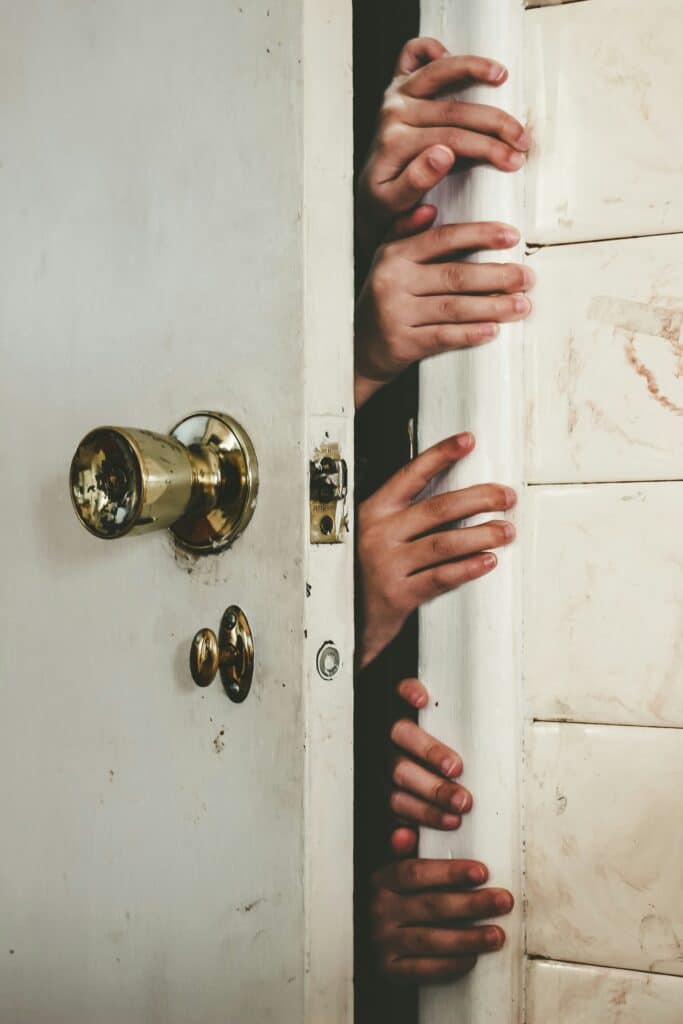
This deep breath of the Spirit isn’t visible to the outside observer. It exists behind closed doors, where my vulnerabilities are most exposed. It exists as holiness that is intimate, embodied, and costly.
It is in these invisible, trivial, everyday moments of rupture, repair, and healing that the Spirit continues to meet me. And even though it doesn’t feel or look “holy,” perhaps the Spirit’s work was never to make me impressive, but more capable of love.
For more by this author or more about parenting, visit our web site.
ABOUT THE AUTHOR

Emily Cortina is a mother raising three bilingual, bicultural children alongside her Mexican husband. Based in Chicago, Illinois, she advocates for restorative justice and accompaniment of individuals impacted by incarceration in her local community and through her work with Catholic Prison Ministries Coalition.
You must be logged in to post a comment.