
Living as Easter People in the Darkness
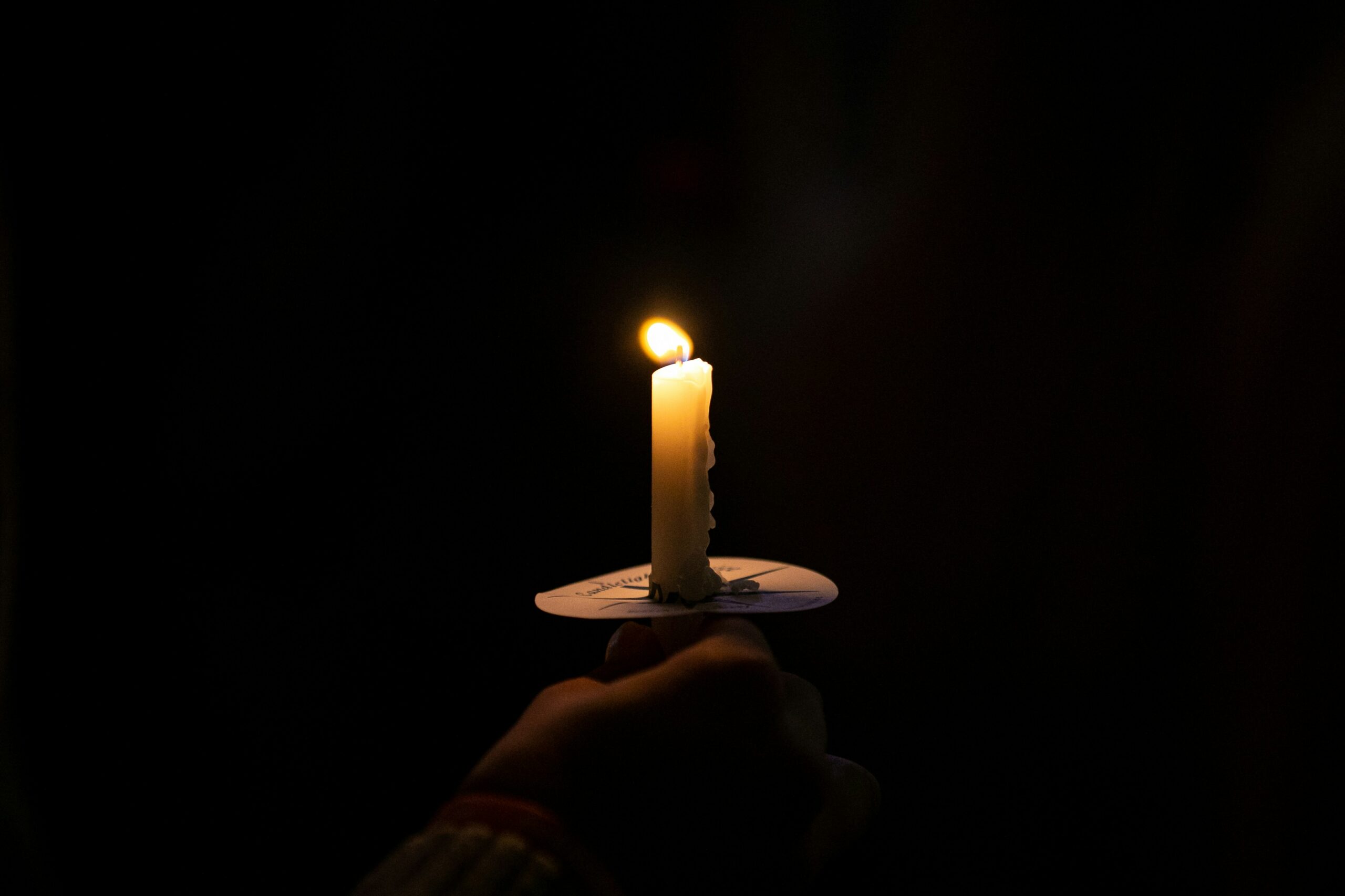
At the Easter vigil, we sit in darkness. It’s the first time I’ve brought my family to this service. The dark church is a new experience for my three children. My 7-year-old is fixated on the small flickering candle in my hand, whispering questions about the dripping wax and helping me to blow it out when it’s time to sit and listen in the dark. He soon falls asleep in my arms.
Old Testament readings take me back in time to stories of creation out of chaos, liberation from slavery, and the invitation to return to God from exile. These narratives mingling destruction, transformation, power, and vulnerability resonate too much with the reality we’re living today.
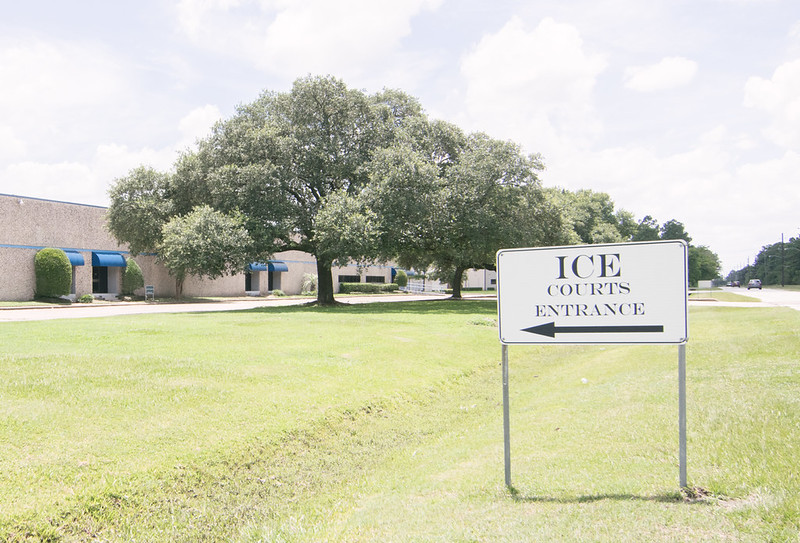
A couple of weeks earlier, one of my son’s classmates’ families appeared in immigration court. Seeking refuge from Venezuela, their dream of finally creating stability for their three children was shattered when the judge granted the government’s request to pretermit their case – a new strategy under the Trump administration in which asylum seekers are denied the opportunity to tell their full story in court in the U.S. and instead are deported to a third country to apply for asylum there.
Sitting on a bench in the lobby of the public library after scanning some court documents, the mother of the family described how the judge’s words — deportation, removal — stuck with her children. “When are we leaving? Are they coming for us? Are you ready yet?” they repeatedly ask.
She described breaking down crying in the bathroom at work, filled with anxiety at pulling together the $1030 – up from $100 previously – needed to file an appeal and maybe, just maybe, buy a little more stability for her children before uprooting them yet again.
My own son, too, asks me questions I don’t have good answers to. Why can’t they stay? Why can’t they go back? Why would they get sent somewhere they don’t know anyone?
Are they going to get picked up by ICE?
My own backdrop for this immediate reality is marked by news of violence, famine, untreated illness, and death that I only know from afar, but seems to ride in my gut and my heart at all times. How many children and parents must suffer? Why are lives discarded so easily? How has cruelty become a Godly trait?
A whole array of systems meant to provide order, peace, and justice – though long imperfect – is being further warped into instruments of chaos and cruelty, and our most vulnerable neighbors are thrown around as pawns in an authoritarian effort to sow disorder. Channels of reprieve are blockaded. Nuanced solutions are mocked. Death is summoned in Jesus’ name.
Eventually, the church lights come on. We squint as our eyes adjust, but our hearts immediately lift. Jesus is Risen. Easter is here. Violence and death is not who we are: Peace, life, and love is who we are.
Yet the darkness around me continues, and I find myself asking: What good is the Resurrection?
Jesus must have known it would take some time to sink in. During these 50 days of Easter that Jesus also gave to his apostles, the lectionary presents us with stories of that early Church, and how they, too, struggled to define what it looked like to live as believers in Jesus’ Resurrection. Through the collapse of the Temple and total reordering of Judaism, through mixed communities composed of Jews and Gentiles, Hellenists and Hebrews, they, too, stood on unstable ground.
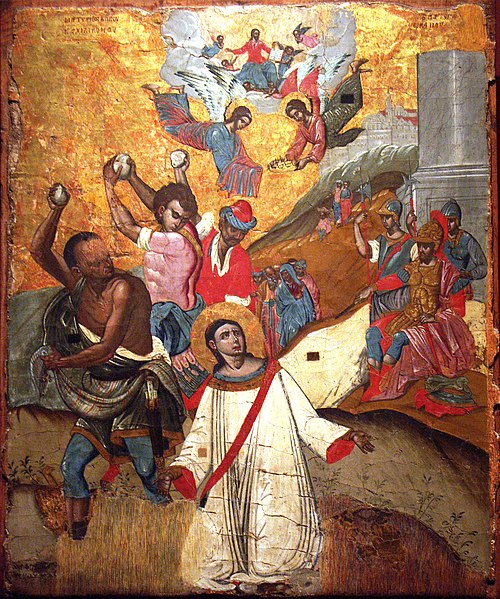
We hear about the brutal murder of leaders like Stephen, and the intense persecution that followed, and how “those who were scattered went from place to place, proclaiming the word” (Acts 8:4).
How did they do it? How did they live as Easter people in the midst of collapse?
That is, when all other sense of stability is stripped away – home, safety, income, health, democracy – what remains? Perhaps by identifying what remains, we find God, and by clinging to God, we become Easter people.
In the case of the early Christians, it seems to have to do with the community:
All who believed were together and had all things in common; they would sell their possessions and goods and distribute the proceeds to all, as any had need. Day by day, as they spent much time together in the temple, they broke bread at home and ate their food with glad and generous hearts. (Acts 2:44-46).
There are certainly moments in these days when the overwhelm of instability in the world pushes me to cling to my material foundation – my house, my bank account, my relative safety, my legal status. Yet these things, too, could wash away at any moment, and what will remain?
My ability to show up for others, to sit with them, to listen, to mourn together, to laugh together, to care for one another, to rely on one another, to hold each other – these will remain. In practicing these things, I practice Resurrection.
Even surrounded by darkness, these practices are the light of flickering candles. As we hold on to that light and share it with others, we move—slowly, together—toward the bright, blinding light of a world made new by the peace, hope, and love of the Resurrection.
For more by this author and more on living as light in the darkness, see our web site.
ABOUT THE AUTHOR

Emily Cortina is a mother raising three bilingual, bicultural children alongside her Mexican husband. Based in Chicago, Illinois, she advocates for restorative justice and accompaniment of individuals impacted by incarceration in her local community and through her work with Catholic Prison Ministries Coalition.
You must be logged in to post a comment.