
Rules for a messy and holy creative practice
I’ve been feeling depressed about many things. I’ve been depressed about AI—about people using AI to write books and articles; AI stealing art and gobbling up water from poor communities; AI ruining mental health. Not to mention endless wars and genocides, climate despair, rising wealth inequality, and more. In all of this, I’ve found myself losing the why of why I write, because it’s hard to remain hopeful and commit to a creative practice.
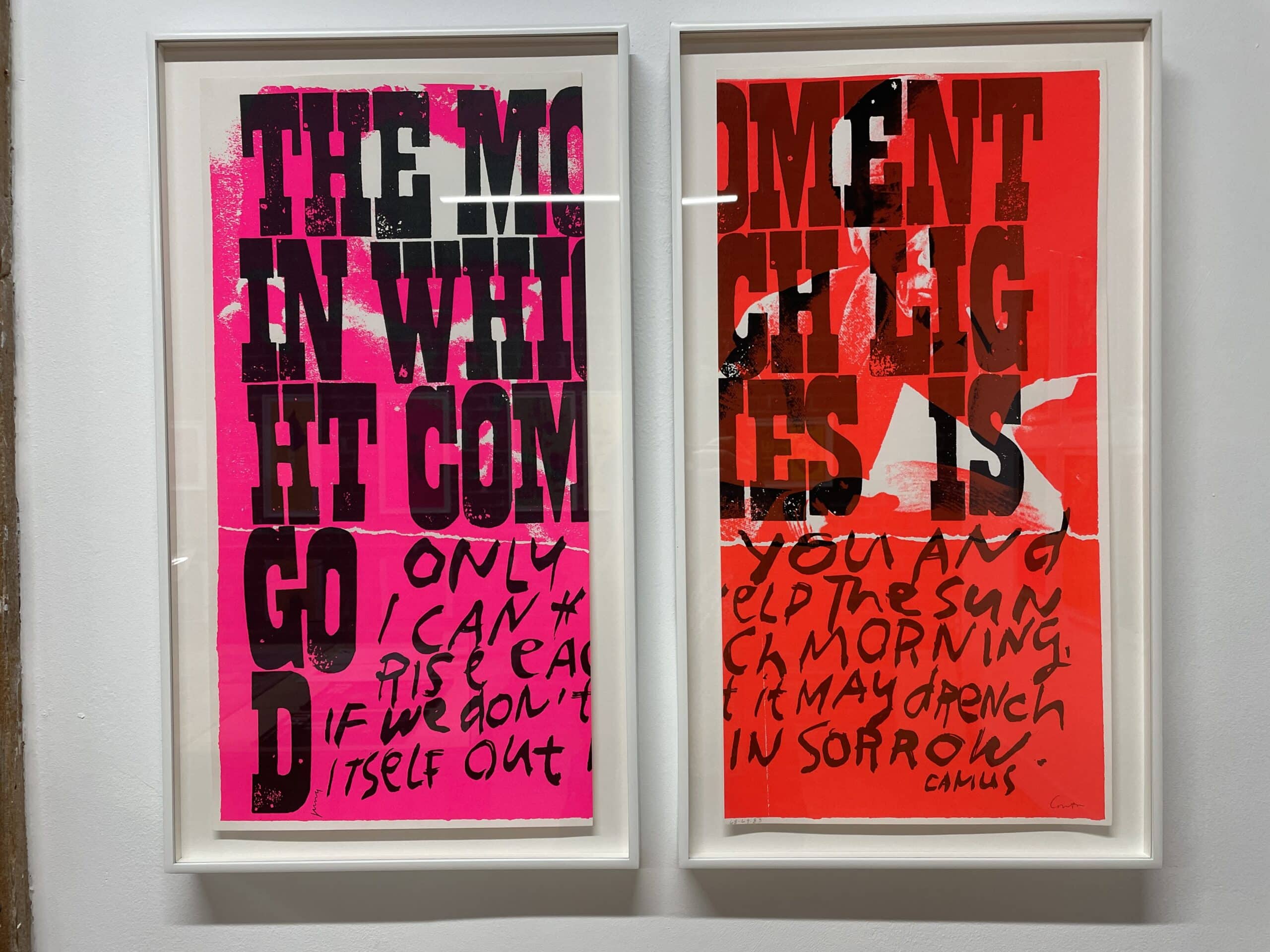
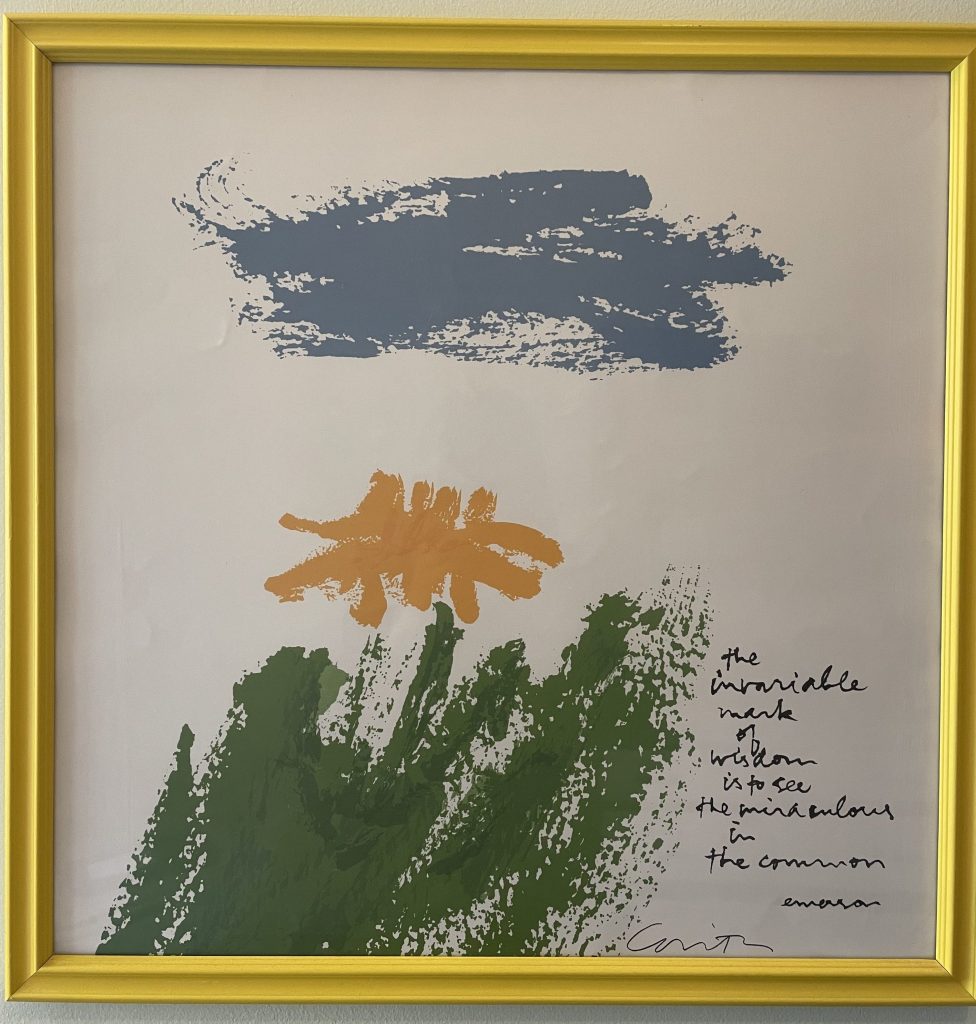
When I find myself feeling burned out creatively, I reach for the words of Sr. Corita Kent. Kent was an artist and educator who created silkscreen prints that combined social justice and pop art. She taught art at Immaculate Heart College in Hollywood, a college her sisters ran, and she created art from the 1950s to her death in 1986. Her prints are vibrant with color and images from popular media and advertisements, and they speak about God, justice, and love.
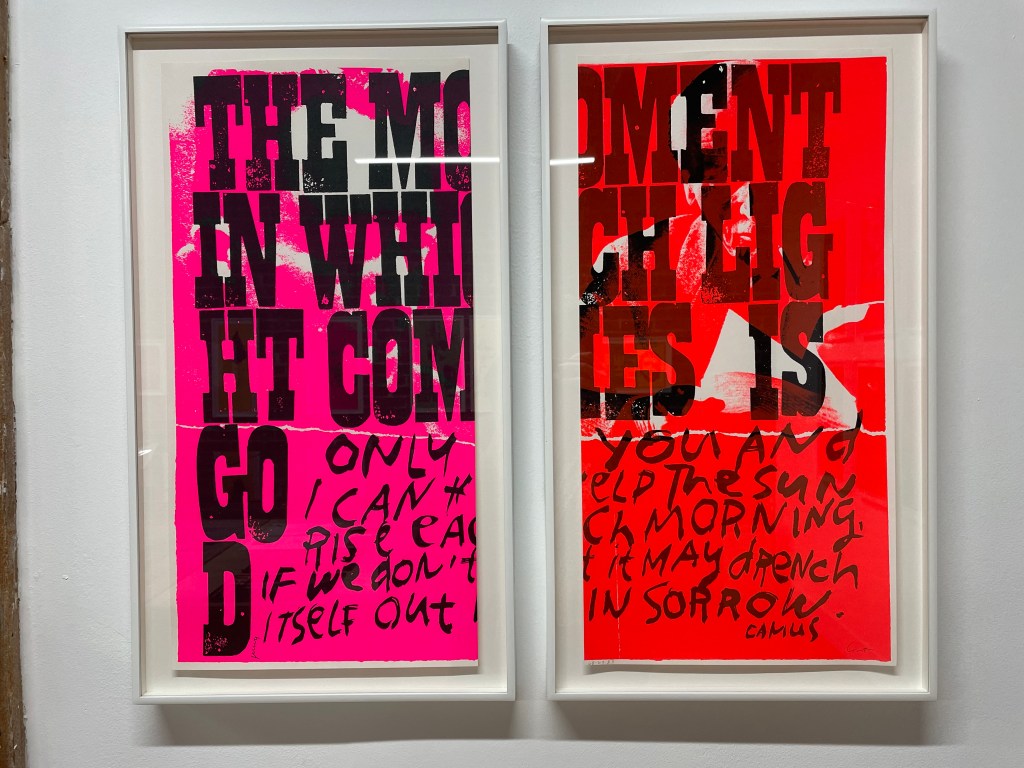
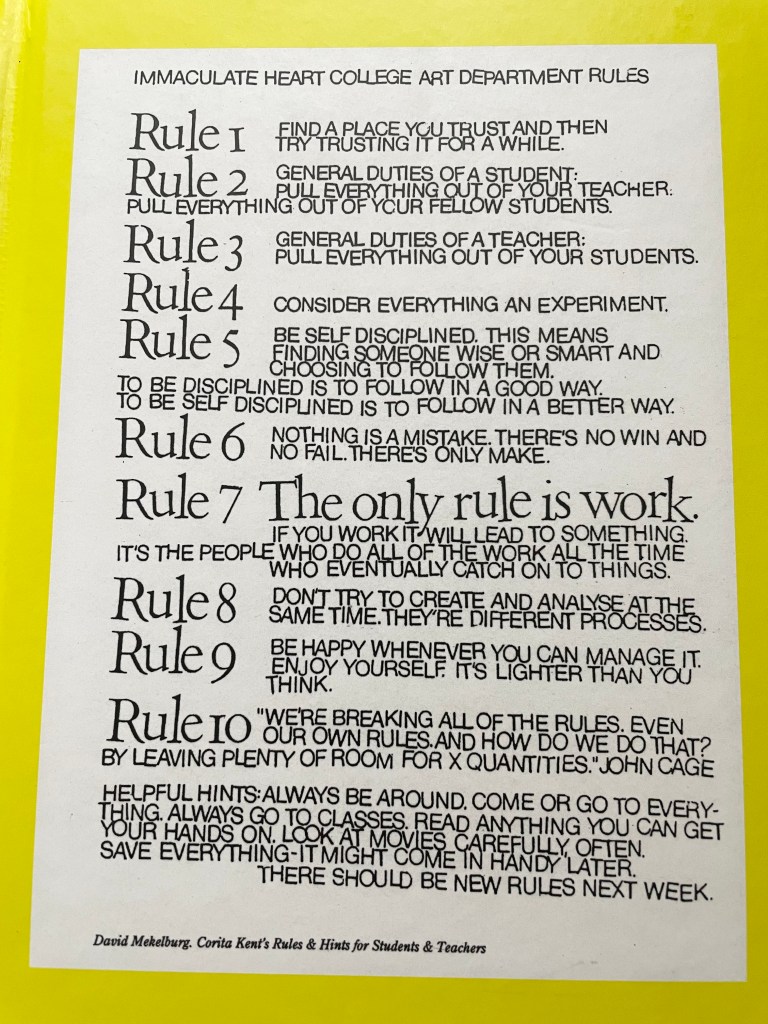
Kent made the “Immaculate Heart College Art Department Rules” for her classroom. These rules are a reliable reset for my heart. Yes, this is what it’s all about, I think after reading. For Kent, art and creativity were never about individual genius, success, perfection, originality, intelligence, or trying to impress others. For her, they were about being alive, about experiencing and loving the world, about living the questions, about transformation and joy, about encountering God.
Corita Kent has been an anchor for me in these scary times, and her art department rules can offer us some fresh air as we create and imagine and stay with the work.
Rule #1: Find a place you trust and try trusting it for a while.
Maybe the hardest but most necessary rule, this speaks to the groundedness and trust we have to have in our own voice, in God’s vocational call to each of us. This is what will carry us when the criticism and self-doubt come.
Through my immersion into Ignatian spirituality the past few years, the place I’ve learned to trust is my interior freedom in Christ. It’s a freedom that nothing can take away—knowing who I am and that Christ calls me to this work whether I succeed or fail, because success or failure was never the point. The point was always to come alive, to say yes to Christ like Mary, to not be afraid.
Rule 2: General duties of a student: Pull everything out of your teacher. Pull everything out of your fellow students.
Rule 3: General duties of a teacher: Pull everything out of your students.
Community is essential in creativity. None of us are in this alone. We need each other to keep going, we need others’ words and art and imaginations. This rule reminds us to be open to feedback, and to celebrate and uplift others’ work too.
Rule 4: Consider everything an experiment.
There is not enough time to make all my ideas come to fruition, so I do the best I can and trust that having a creative practice is all an interconnected experiment. Some things I’ve created are sitting in a drawer for now, but maybe they will inform something else down the road. This rule reminds me to practice humility and self-forgiveness.
Rule 5: Be self disciplined. This means finding someone wise or smart and choosing to follow them. To be disciplined is to follow in a good way. To be self disciplined is to follow in a better way.
I love what writer Dan Paley wrote about this rule: “To be disciplined is to follow in a good way—developing the craft and work ethic required to create. To be self-disciplined is to follow in a better way—finding the greater purpose that animates an artist to endure the hard work of creating. What’s your discipline?” Perhaps this is the question to ask ourselves in such a violent world, when our voices feel small and scared. What is our greater purpose? What gives us sustenance to keep going, to keep nurturing the seed of creativity in us, to imagine a better world when all feels bleak?
Rule 6: Nothing is a mistake. There’s no win and no fail. There’s only make.
It’s never too late. When I feel down on myself, when I feel like I’m running out of time because I won’t publish a book before I’m 30—this rule silences all that and grounds me in what’s true. What’s important is to make, and as Corita said, “doing and making are acts of hope.”
Rule 7: The only rule is work. If you work it will lead to something. It’s the people who do all of the work all the time who eventually catch on to things.
When I think of the “work” of a creative and spiritual practice, I think of going for walks, of doing chores and dishes, of gardening and composting, of going to Mass, of cooking for my community, of volunteering at the food pantry, of spending time with my friends—because all of this and more informs my creativity and how I’m able to imagine. It’s all part of the work.
Rule 8: Don’t try to create and analyse at the same time. They’re different processes.
Let the words and art be bad at first, because that’s better than nothing at all. What’s important is to start. Don’t overthink it.
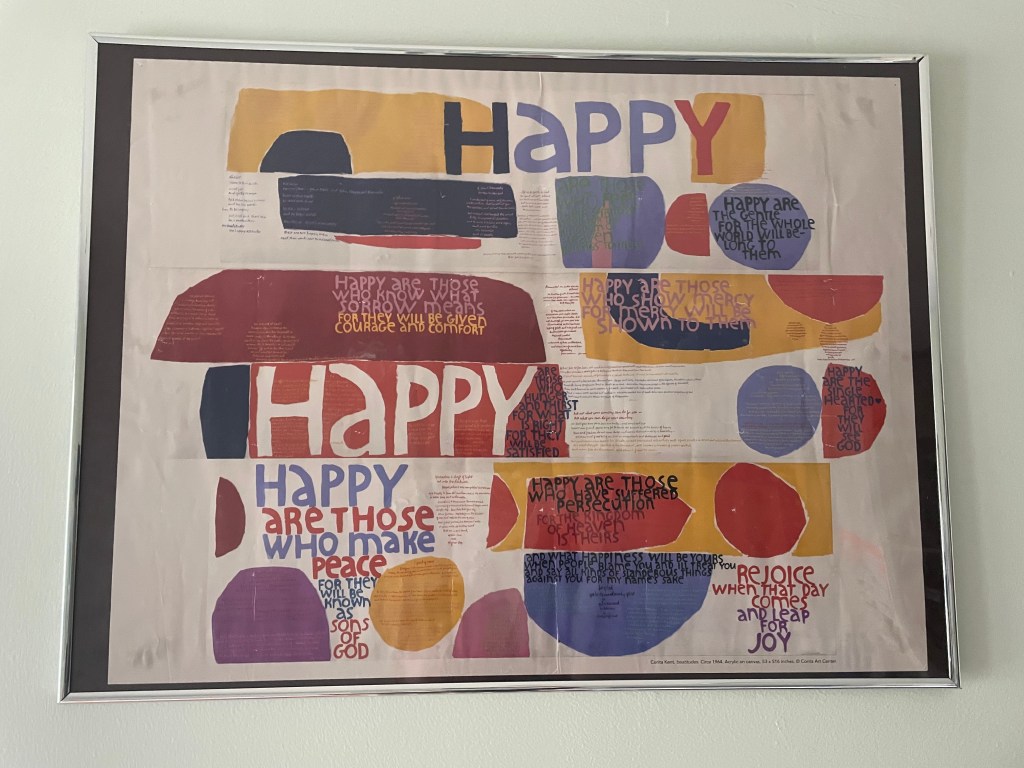
Rule 9: Be happy whenever you can manage it. Enjoy yourself. It’s lighter than you think.
Artist Karina Esperanza Yanez wrote that the world puts “immense pressure on artists and creatives to constantly create, post, and grind. When we aren’t creating art, hustle culture forces us to continually think about creating and makes us feel insufficient when we aren’t producing as much as our peers. Ahead of their time, Corita’s rules create room for us to pause, reflect, be playful, and rediscover the joy of creating.” Creating is hard work, and this rule doesn’t dismiss that. It reminds us of that greater purpose, and that we each have a unique way that we co-create with God. Creating is fun and dignifying.
Rule 10: “We’re breaking all of the rules. Even our own rules. And how do we do that? By leaving plenty of room for X quantities.” —John Cage.
This rule is about the playfulness of creativity, which is also about the playfulness of God and the Holy Spirit, who is always shaking up what we think we know or feel certain about. A life in Christ is a life of surprise.
These rules are communal care for artists and makers and writers in the world. In her simple way, Corita fully acknowledges the difficulty of societal and individual pressure and the state of the world, while also honoring and advocating for the joy and deep purposefulness of creativity. These rules don’t exclude, because to her, everyone is an artist. These rules help me feel less anxious because there is no wasted time when I am choosing to be creative. Being creative is prayer.
Corita ends with helpful hints, which are good antidotes to boredom and despair. Or maybe, they are other ways of praying:
Helpful hints: Always be around. Come or go to everything. Read anything you can get your hands on. Look at movies carefully, often. Save everything—it might come in handy later. There should be new rules next week.
May we create and imagine with courage and joy. May we come alive in new ideas, and may we become more deeply ourselves in this messy, holy process. May we meet Christ there.
For more by this author and more about the creative life, visit our web site.
ABOUT THE AUTHOR

Cassidy Klein is a journalist, writer, and editor based in Chicago. She has worked as an editorial assistant at Sojourners magazine and U.S. Catholic magazine. She grew up in Denver, Colorado and studied journalism and philosophy at PLNU in San Diego. Find more of her work at cassidyrklein.weebly.com.
You must be logged in to post a comment.