

Anxiety at the Crossroads: Where We End and God Begins
The couple sits next to one another on the two-seater couch in my office, not minding the imposed closeness, arms intertwined. They have worked hard for and in this relationship, and it continues to flourish. In fact, they are getting married in two days. And they are so anxious.

What will the weather be?
Will my in-laws accept me?
When will we pack up the apartment?
Who will be our community in our new city?
As a psychotherapist, I work with many people as they experience anxiety, whether they are reaching a milestone or tending to the routine. Sometimes this anxiety significantly impacts their functioning, making daily tasks unmanageable. Others are able to push forward while discomforting emotions and even physical symptoms confront them on a recurring or an ongoing basis. This level of anxiety can require psychological treatment, and possibly medication. Others may not experience this severity of anxiety, and still may benefit from talking with a counselor or therapist to better understand the origin of their anxiety and identify and learn coping skills suited to them and their situation.
Those who are recovering from more intense levels of anxiety may express disappointment when I tell them that their anxiety will never go away completely, and that all persons, healthy persons included, will respond with anxiety when faced with the trials of life. Some furrow their brows and say, But aren’t my fear and anxiety signs of having too little faith?
Yes, the Gospel of Matthew, Chapter 6. I am familiar with it. At one point, I wrote “Matthew 6!†on the dry erase board outside my college dorm room door.
“Therefore I tell you, do not worry about your life, what you will eat or what you will drink, or about your body, what you will wear. Is not life more than food, and the body more than clothing…And can any of you by worrying add a single hour to your span of life?…But strive first for the kingdom of God and his righteousness, and all these things will be given to you as well. So do not worry about tomorrow, for tomorrow will bring troubles of its own.â€
~ Matthew 6: 25, 27, 33-34
Jesus literally told his disciples that there was no point to worry or anxiety: My Father’s got this.
But let’s look at the last verse of this discourse: Do not worry about tomorrow.
I believe that anxiety has very little to do with our faith and trust in God, and lots to do with our ongoing struggle to live in the present.

Fear, like anxiety, is a natural part of the human experience; it helps us to assess potential threats and to protect ourselves. It is likewise natural for us to fear the unknown, including the unknown future, because we cannot know that the future will be safe and secure. We can predict, we can plan, we can pray and believe. But we can’t know until the future becomes the present. At what point, though, do our fear, worry, and anxiety surrounding the future begin to interfere with our ability to experience life in the here and now, in all its pain, beauty, sorrow, and elation?
After each of my three godchildren was born, I came to their homes to welcome them, and to help their parents. The duties were different each time. Cook pasta sauce, give the 11 pm bottle, read bedtime stories to the toddler. These times were surreal in the way all periods of intense sleep deprivation are. And yet there was something soothing about the rhythm of the days, which revolved around a tiny new life, and the thousand mundane moments contained within.
When my second godchild was born, I had just told my boss that I was quitting my secure position to pursue ministry, a field with job prospects even less auspicious than my current field of social work. I was preparing to move out-of-state for further study. Many people in my life questioned what I was doing, told me they didn’t understand, were even angry. But none of that was a concern to me in my godchild’s home, as we tended to the unrelenting demands of new love incarnate. My vocational shift would, and did, get worked out….eventually.
I’m not suggesting that we live life unplanned, or without discerning how God is calling us to live, and love, and serve.
But as embodied beings also formed in the image and likeness of God who carry that spark of divinity within, it can be challenging to name where we end and where God begins. Maybe even impossible on this side of eternity.
What does God leave in our care, and what do we leave in God’s? Sometimes it can be shockingly clear. Other times it is less so, or not at all.

As I write this, I am preparing for a surgery to remove cancer from my body. How do I feel? Well, I am grateful for access to early diagnostics, medical care, and patient education. I am equally grateful for the care of my own therapist, who has treated me long-term and will continue to work with me as I navigate this illness. I am at peace with the choices I have made around intervention. And, no one can guarantee the long-term outcome. Am I anxious, worried, fearful? Sure. This is where the God of the present moment finds me. Then I can only encounter what unfolds day to day, and meet it as well as I can.
“Into your hand, I commit my spirit,†as the Psalmist sings (Psalm 31). Jesus also quoted this as he approached death. I am not dying right now, so I prefer the rendering, “I put my life in your hand.â€
God’s hand.
It is a place beyond worry, anxiety, and fear.
It is a surrender to the simplicity of the moment.
So.
Look into her eyes, and say, “I do.â€
Pick up the crying infant.
Make that call you want to avoid.
If your heart is pounding, that means you’re alive.
Breathe deeply, filling up your lungs.
Hold your breath for a moment, then exhale, letting it go.
Do it again,
All through this messiness which is life in Christ
Until the end, which is the beginning.
And in the beginning
Is the Word.
For more by this author and more about anxiety, visit our website.
ABOUT THE AUTHOR
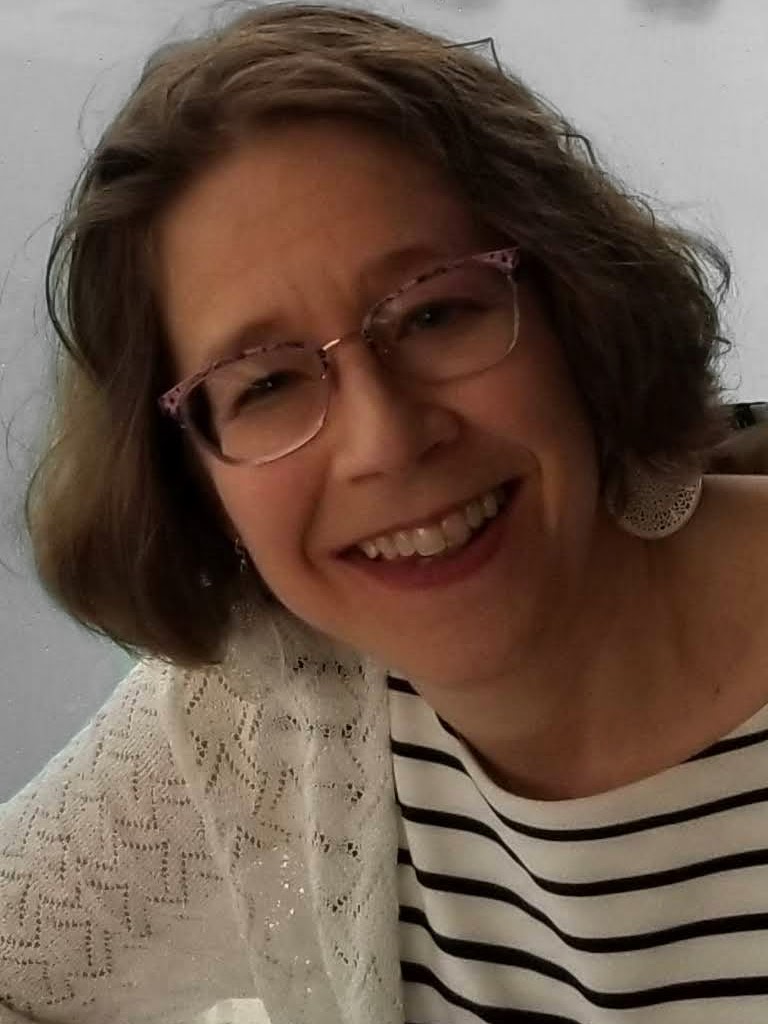
Angela Paviglianiti was ruined for life in the Jesuit Volunteer Corps around the turn of the century. She is what happens when you mix women’s studies, social work, and seminary. Angela is indebted to Ignatius of Loyola and Dorothy Day, although she probably wouldn’t have gotten along with either of them. She still believes in fairies, and the Gospel according to you and me and us.
You must be logged in to post a comment.