

An Advent Reflection on Pigeons
This Advent, I’m reflecting on pigeons and finding an odd comfort in envisioning the Holy Spirit as a city bird. The violence of poverty in cities and the injustices in our world this year have me looking to these small and fraught creatures, surviving in the cracks of discarded places.
In my neighborhood of Hyde Park in Chicago, tucked in a corner of the concrete underpass where the 56th street Metra train stop is, a pigeon has made her home. She is all white with little gray splotches and red-orange feet, except one of her legs is just a stub; she lost some toes along the way. She is a city bird—she takes baths and drinks water from the same dirty puddles. Her eyes are little shining night skies. She watches the joggers and bikers and train-goers, skidding away when they get too close.
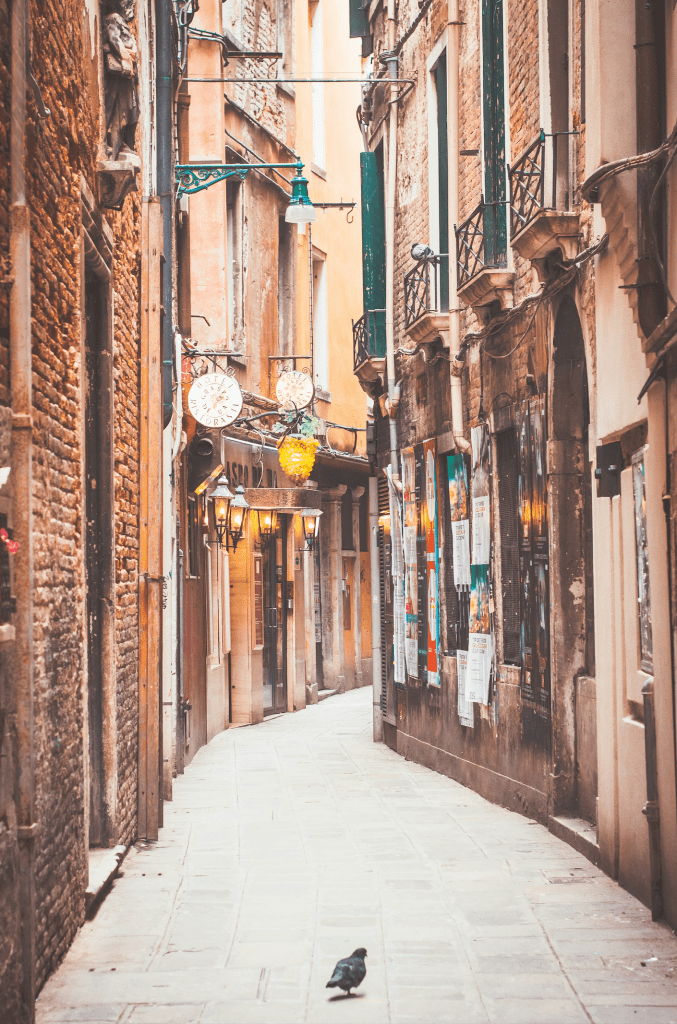
“Doves are the same as pigeons”—this was a quote at the beginning of one of the chapters in the book The Sisterhood of the Traveling Pants. Something about this quote struck me when I read the book in seventh grade, and I wrote the quote down in my journal. Maybe it was a revelation and mystery that so-called beauty and so-called ugliness could be the same.
Pigeons, particularly rock pigeons, the kind that live in Chicago and other cities, are dependent on humans, which is why you don’t really find them in the wild. They were domesticated by humans thousands of years ago, and were brought to North America by European settlers who carried them here as pets and food sources. Eventually, along the way, they lost their popularity as pets and were dumped into the streets to fend for themselves, making them feral.
Rock pigeons contain a tiny magnetic organ in their beaks that helps them feel the Earth’s magnetic pull, giving them strong navigational skills and making them able to return home from 600 miles away. That’s why pigeons have been used in wars, including WWI and II, to deliver communications and information.
Despite their (forced) involvement in war, white pigeons and doves in particular have long been symbols of peace. There are businesses that sell white pigeons that people can release during weddings and funerals. Chava Sonnier, a volunteer at Chicago Bird Collision Monitors, said in a 2019 article of white pigeons when they are released: “Because they’re white there is no camouflaging themselves. So, often if they are not rescued first, they just get eaten by predators. If you’re downtown and you see spotted pigeons… some that have white on them, they’re probably the offspring of a dumped wedding pigeon who was able to survive and married a city pigeon.”
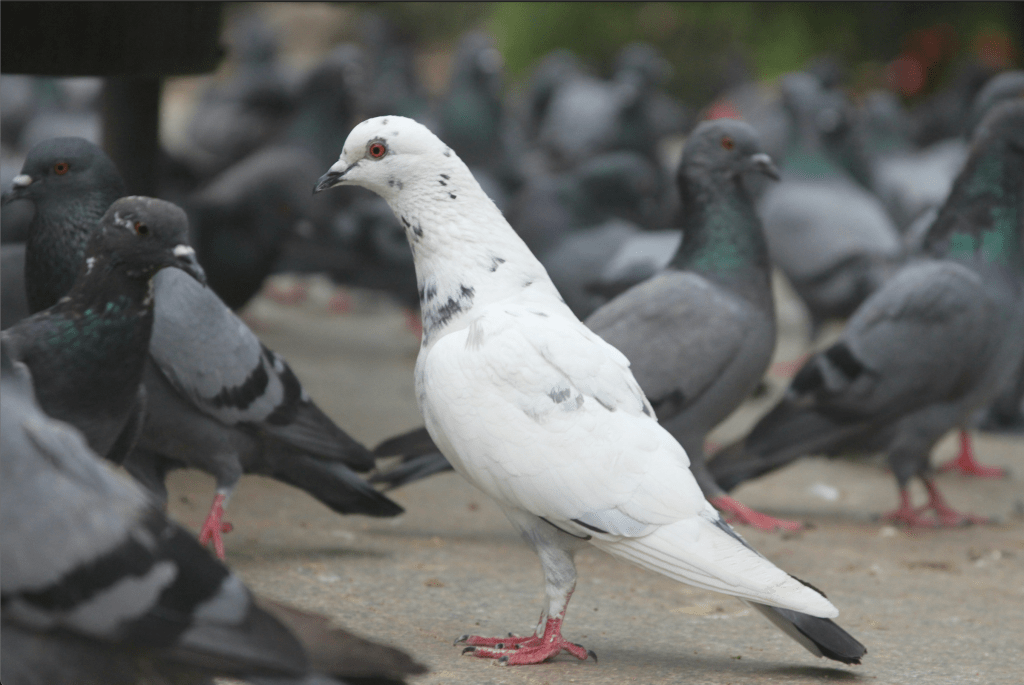
For pigeons, companionship is survival. Sometimes I scroll through the Great Lakes Pigeon Rescue website, looking through their pictures and names, and often the pigeons come in pairs. They are creatures that become incredibly attached to their life-partners.
Last Sunday, at a house church I’ve been attending called Moveable Feast, we did a visio divina—“sacred seeing”—exercise together, in which we engaged in imaginative prayer while contemplating a piece of art. The art that our pastor chose was a print by the Catholic Worker artist Sarah Fuller. It depicts Mary’s annunciation in a modern context. Mary is a young teenager, reading a book on her bed in her small room with art on the walls. At the window, a bird (that to me looks like a pigeon) sits on the windowsill and gazes at her. She gazes back; her face has an expression of curiosity.
I love the correlation between this bird and the angel Gabriel, and how God chooses, specifically, both a bird that is overlooked on the streets and a totally ordinary teenage girl.
There’s an intimacy and understanding in this image. I think of what I know about pigeons: Did it have a magnetic pull toward Mary? Was it hoping to find a companion and friend to survive this harsh world with?
The Holy Spirit wants to make a home in us, surviving in the dirty and rejected places, constantly pulled toward and searching for us, as close as our breath.
For more on Advent, see Sister Julia’s prayer service Praying in the Dark or Greg Little’s Advent Readiness and Mutual Hospitality.
ABOUT THE AUTHOR

Cassidy Klein is a journalist, writer, and editor based in Chicago. She has worked as an editorial assistant at Sojourners magazine and U.S. Catholic magazine. She grew up in Denver, Colorado and studied journalism and philosophy at PLNU in San Diego. Find more of her work at cassidyrklein.weebly.com.
You must be logged in to post a comment.