Book Review: What You Sow Is a Bare Seed
On a blazing, Washington, DC summer day in 2021, I walked to the Mount Pleasant farmer’s market with my friends and housemates Joy and Ashley. Joy had been volunteering with Mt. Pleasant library, and at their table they were selling tote bags, stickers, and shirts that said “What’s more punk than the public library?”

Joy, Ashley, and I lived together in an intentional community as part of the Sojourners’ fellowship program. Sojourners is a Christian social justice organization and magazine.
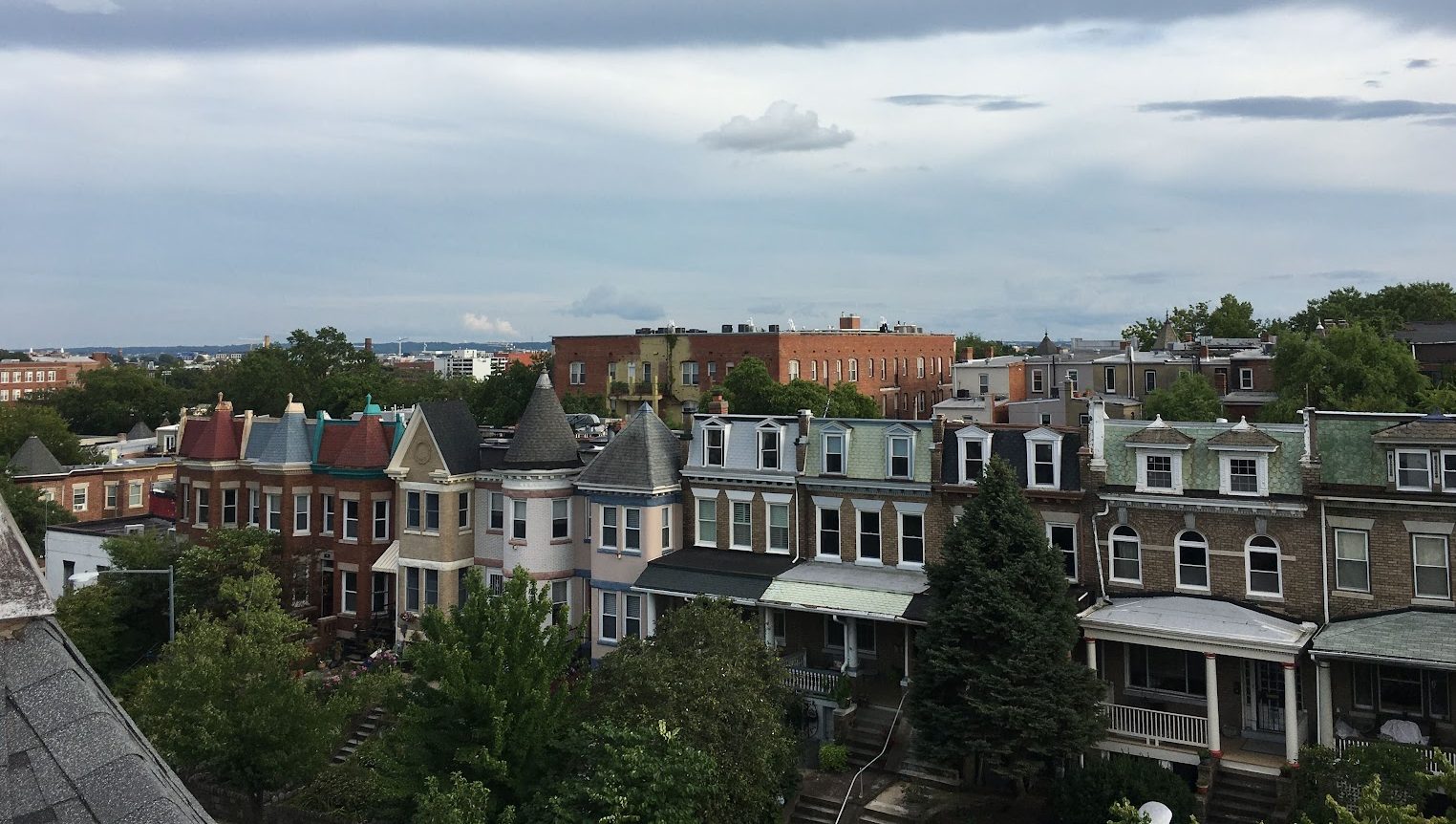
Eight of us moved into the homey row house in the Columbia Heights neighborhood of DC in August 2020 for the fellowship. Because of COVID restrictions, it wasn’t until that next spring and summer that we began to see more of the city. I learned more about the surrounding neighborhoods, including Mount Pleasant, which has a history of being home to immigrants, especially from El Salvador, and an amazing punk history. The Mount Pleasant library has one of the largest punk archive collections in the United States.
Another focal point of Mount Pleasant is La Casa—a building that was once a home and worship space to the Community of Christ, a countercultural Christian community in DC.
Last year, pastor and journalist Celeste Kennel-Shank (who was also a Sojourners fellow before me) wrote a beautiful, honest, and hopeful book about the Community of Christ and its members, full of in-depth reporting and research. Kennel-Shank grew up in the Community and was baptized there.
In What You Sow Is a Bare Seed: A Countercultural Christian Community during Five Decades of Change (Wipf & Stock), Kennel-Shank interviewed dozens of former members of the Community of Christ and reported on the historical context of the DC neighborhoods the Community was part of, at first Dupont Circle and then Mount Pleasant.
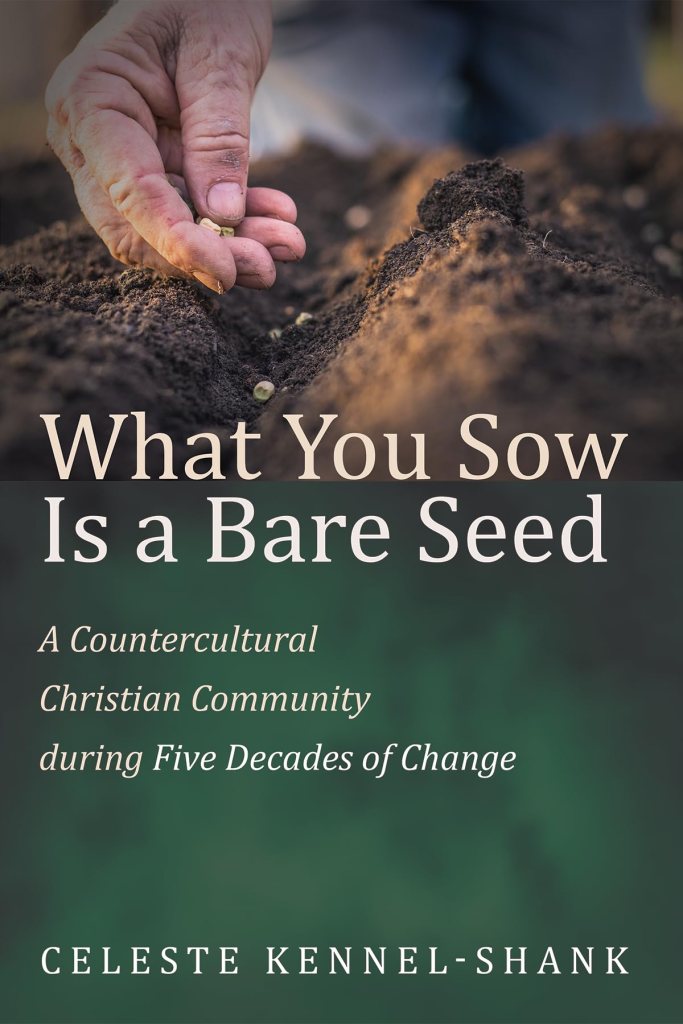
Kennel-Shank wrote the book to tell a complete story and offer an example of “ordinary but extraordinary” people building Christian community. Kennel-Shank writes that we’re better able to create our own communities and do the work of justice “when reflecting on concrete examples” of people who have come before us.
The Community of Christ started in 1965 in Dupont Circle as a project of the Lutheran church. The Community was always ecumenical—members retained their faith traditions, and it came to be known as a mixed Protestant and Catholic community.
“The Community of Christ saw its mission as engaging everyone in a square mile in an inner-city neighborhood,” Kennel-Shank writes. The Community had a self-published magazine called Stance, where members would write reflections on current events or publish poetry or sermons. They were involved in activism and civic service, held worship and compline services, and offered hospitality through giving people a place to stay and had an open house where anyone could enjoy a cup of coffee and chat. They also ran a house plant shop called Third Day that was always packed.
In the early years, the Community “agonized about how to define community and whether they had it,” Kennel-Shank writes. “They finally decided that community is a gift. You can create the conditions in which community can be given, but you can’t create community.”
Though I didn’t know the people Kennel-Shank writes about, she tells their stories in such a human way that I often resonated with Community members’ longings, concerns, and hopes as someone for whom community and faith are also deeply important.
Dora, an Armenian-Lebanese scholar and activist, was a smart, spirited anchor throughout the Community’s years. Rosemary Radford Ruether, the Catholic feminist theologian, was a member for a time, and often wrote in Stance. Rudy, an illustrator who worked for the US Forest service and was responsible for Smokey Bear, joined the Community along the way, as well as Sally Hanlon, a former Maryknoll sister.
Changes always happened in the Community of Christ—one of their mottos was “dancing in the steps of change.” In the mid-1970s, the community moved to Mount Pleasant and bought La Casa, which had been empty. Sojourners, the community I was part of, also started nearby in the 1970s.
In the 1990s and 2000s, punk culture became part of the Community. Kennel-Shank recalls going to punk shows at La Casa with her friend “in the same room where we were both baptized.”
Kennel-Shank also includes critiques of the Community. The Community was majority white and middle-class, and racism was often “treated as a problem outside of the Community.” Alicia, who grew up in the Community, said it was a masculine space.
“These communities can also engage in critique of themselves because they know that the gospel of grace means they can make mistakes in their efforts to live an ethical life,” Kennel-Shank writes.
Kennel-Shank documents the journey members went on as they realized it might be time to close the church. After difficult conversations, they decided it was time to end, and were then in a “strange position of trying to figure out how to give away a valuable piece of real estate in the midst of a hyper-gentrifying city.”
The Community received proposals and decided that the mission of La Clínica del Pueblo, a community healthcare clinic that serves migrants, LGBTQ+ people, domestic violence survivors, and more, resonated with the ongoing legacy the Community wanted to leave, and they gifted La Clínica del Pueblo the building in 2016.
“Our work, like our bodies, is perishable, but God will transform it into a form that is immortal,” Kennel-Shank writes. “Therefore, our labor—all that we have done and left undone, all that we did imperfectly and all that pointed toward a wholeness it could not reach, none of it was in vain.”
I’m so grateful for What You Sow Is a Bare Seed, for the hopeful witness of all the people I got to meet through Kennel-Shank’s writing, to feel across time that I’m not alone in wrestling with big questions about how to live ethically and love others. Reading this book made me think more deeply about the kind of legacy I want to leave. I’m reminded that I walk in the path that Christian justice-seekers and community-builders have carved before me, and I join them, continuing to search and seek and sow new seeds.
ABOUT THE AUTHOR

Cassidy Klein is a writer and journalist based in Chicago, Illinois. She grew up in Denver, Colorado, and attended Point Loma Nazarene University in San Diego, California, to study journalism and philosophy. She previously worked at L’Arche Chicago and Sojourners magazine. Cassidy lives in an intentional community called The Fireplace and is editorial assistant at U.S. Catholic magazine. Find more of her work at cassidyrklein.weebly.com.