Christmas at the border
Images by Julius Scholsburg, courtesy of Kino Border Initiative
I recently moved to the borderlands. It is a graced, gritty place — far away from the snow-covered landscape that is lit up so beautifully this time of year; the landscape that I left behind about a month ago.
I am now centered in Ambos Nogales — “Both Nogales” — a place that refers to two distinct national cities: Nogales, Arizona, United States of America, and Nogales, Sonora, United States of Mexico. In 1898 a telephone line marked the international border between these two countries. Families were living on both sides: moving freely, working, trading and most likely not giving much thought to the future of the emerging geo-political reality that is currently demarcated by a controversial 30-foot wall.
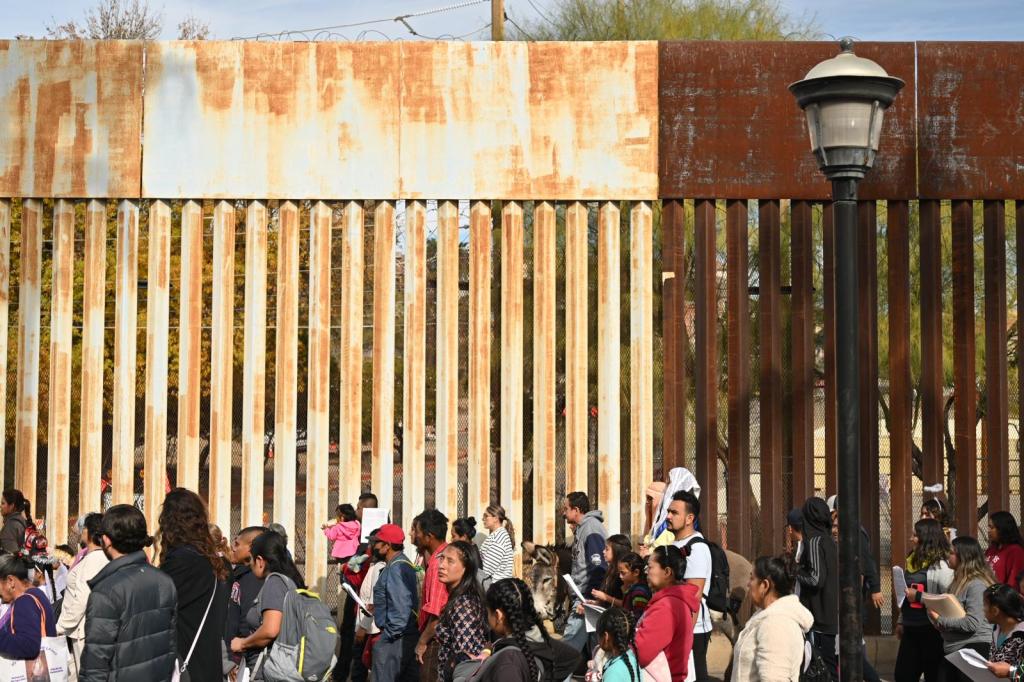
Now, people here are clearly experiencing the impact of complex socio-political and economic narratives that can feel as overwhelming as the wall itself. Shopping and trade on both sides of the border has changed since Title 42, with Arizona being hit hard. It’s increasingly burdensome for families attempting to access the US asylum process as they face obstacles like months-long wait times and the Biden asylum ban. Instead of investing in systems that could reduce the burden on criminal courts and federal prosecutors while at the same time lessening unjust harm inflicted on immigrant communities, elected leaders in the US choose to invest in policies that use taxpayer dollars to criminalize migration. Add to this the climate crisis and the increasing numbers of families who have no option to remain in place … It’s beginning to look a lot like Christmas.
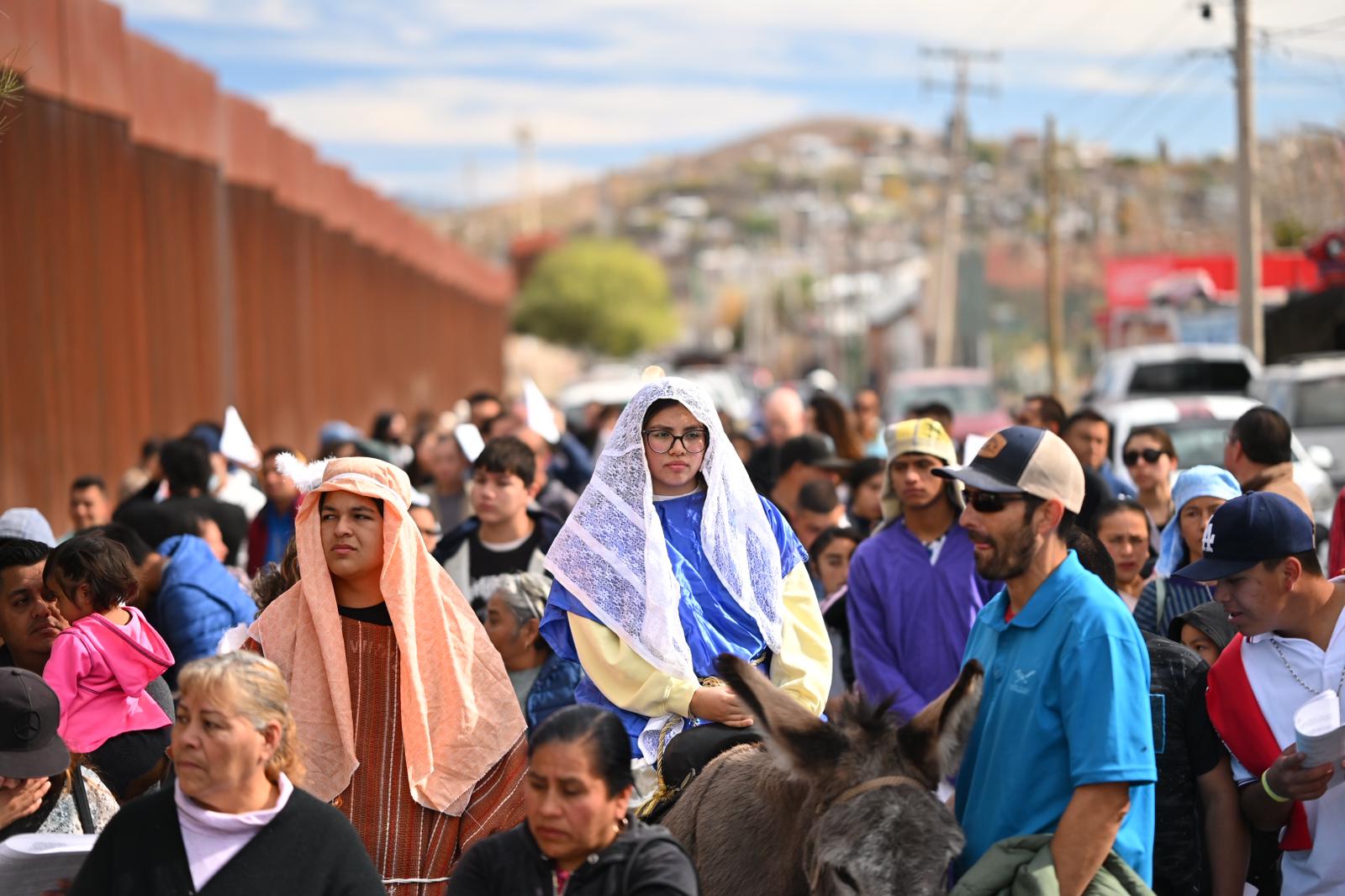
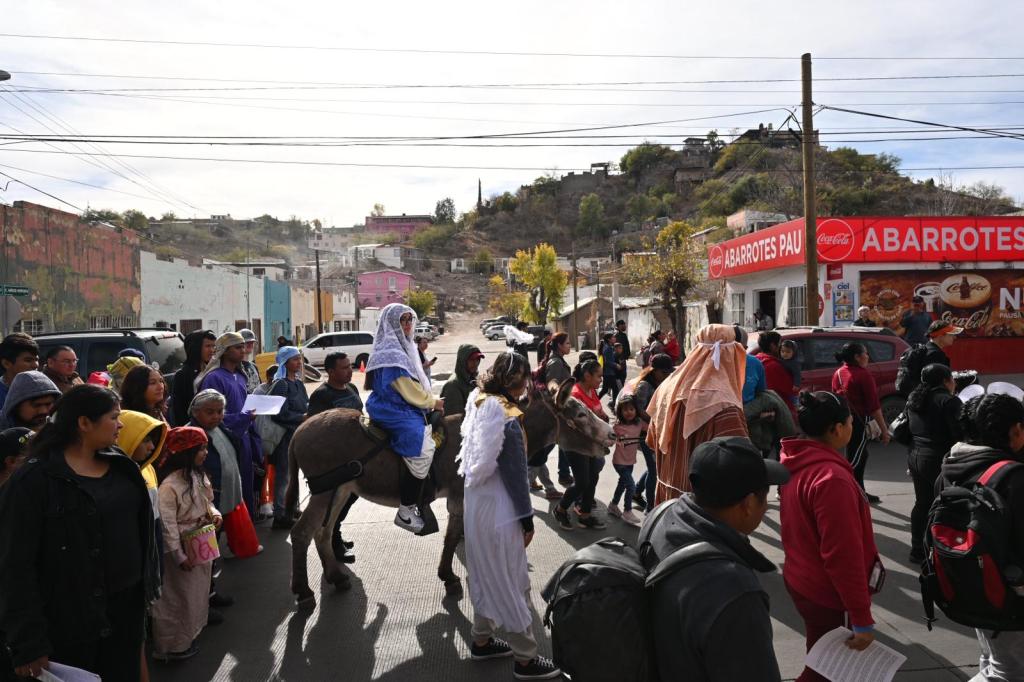
I serve with the Kino Border Initiative, a binational, inclusive, Roman Catholic organization that was born as a faithful response to the changes in human migration patterns in Ambos Nogales. Our vision is migration with dignity, powerfully illustrated this time of year in the religious festivals of las posadas (which means, “the inns”). Posadas are celebrated in Mexico and various Latin American countries before Christmas, when families dress up as Joseph and Mary to reenact the Holy Family’s journey from Nazareth to Bethlehem in search of a safe place to give birth to their son, Jesus. Kino Border Initiative sponsors a Binational Posada each year, during which migrants in the area, the bishops from Tucson and Nogales, Sonora, faith communities, schools, immigrants from both sides of the border and friends from all over recall the mystery of the Incarnation through a concrete re-enactment that reminds us that Jesus was born in migration.
It’s beginning to look a lot like Christmas.
For me, participating in this posada becomes a pilgrimage in which I am reminded that the experience of accompaniment is holy. It is a pilgrimage of palpable goodness shared by those who live with little. It is a pilgrimage that challenges me to understand hospitality beyond comfortable definitions.
And, quite frankly, this pilgrimage is increasingly uncomfortable.
Not only is it hot and dusty, but I can be elsewhere. I have a choice. I can be where I feel neat and clean; where I better understand the language; where people look more like me; where we sing songs that I’ve sung since childhood; and, where I associate the season with Santa Claus and gifts under a decorated tree.
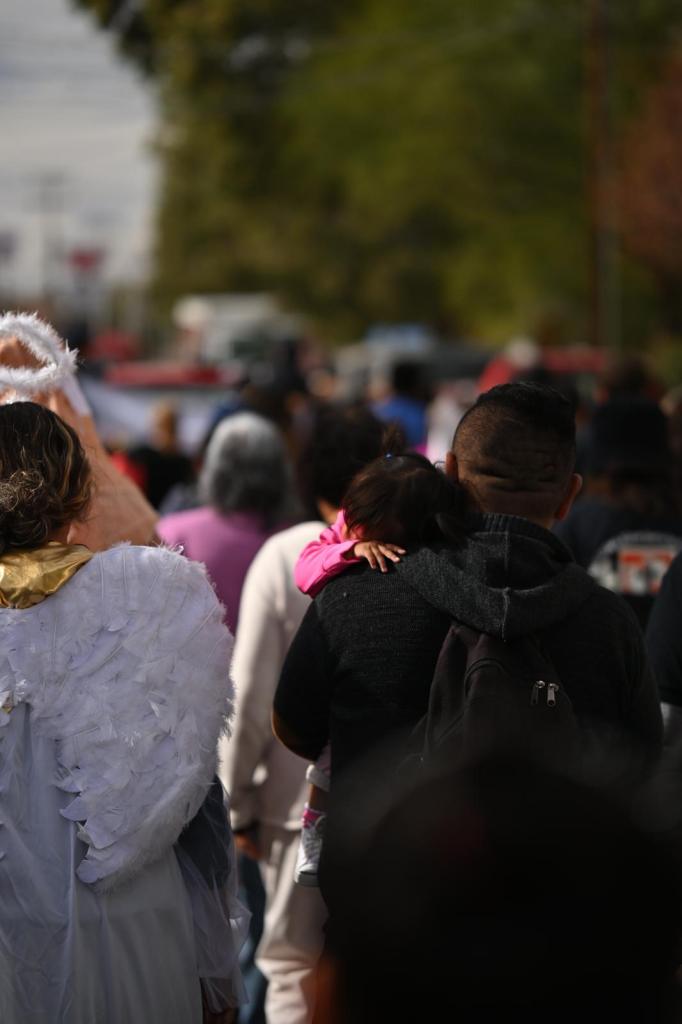
But that’s not here, now. This is a posada of migrants, and as I recognize that I chose to undertake this pilgrimage, I am accompanied by hundreds of migrants who had no choice. María speaks of leaving her home in Guerrero because the violence was so extreme that her sons could not attend school, making them prime targets to be recruited by local gangs. Humberto and his wife left Guatemala over a year ago and have been waiting in Nogales for their asylum process to move forward. Temporary work and renting a room while the asylum process lingers is not unheard of for migrants stuck in Nogales, and much preferred to being trafficked or kidnapped (which, unfortunately, happens all too often).
I am a Franciscan Sister of Perpetual Adoration, and this Christmas we join Franciscans world-wide in celebrating the insights that St. Francis shared on the Incarnation at Greccio. In 1223, wanting to emphasize the humble circumstances of Jesus’s birth and to inspire the local people to more deeply appreciate the Christmas story, St. Francis set up a live Nativity scene which included live animals and a hay-filled manger to recreate the birth of Jesus as described in the Gospels.

As I walk with migrants along a 30-foot wall in the desert, beside a live donkey upon which María sits and José looks for a place that will take them in, I realize that it really is beginning to look a lot like Christmas.

What does your Christmas look like this year?
About the author

Franciscan Sister of Perpetual Adoration Eileen McKenzie has ministered as a nurse, clinical researcher, acupuncturist and, from 2018 to 2022, president for the Franciscan Sisters of Perpetual Adoration community. With a bachelor’s degree in nursing, a master’s degree in oriental medicine and a predoctoral fellowship in clinical research, she has missioned throughout the United States and West Africa. Sister Eileen serves FSPA in the mission of social justice as a member of the Anti-Racism Team, working to dismantle white privilege and for equity and inclusion of all, and the Truth in Healing Team, researching the congregation’s history of complicity in the assimilation of Indigenous children at St. Mary’s Boarding School in Odanah, Wisconsin. She currently serves as mobilization specialist with the Kino Border Initiative, a bi-national, inclusive Roman Catholic organization whose vision is migration with dignity. She can be reached by email at emckenzie@kinoborderinitiative.org.


One Comment