

Don’t close the door on hope!

Am I the only one who feels dizzy from daily news slaps?
Minneapolis.
Venezuela.
Greenland.
Last year we had a solid alternative vision. Pope Francis declared 2025 as the Jubilee Year of Hope and we were all pilgrims, journeying together in faith. I grasped that proclamation like a lifesaver. It anchored me as I watched my country change overnight, starting on January 20th, and continue throughout the year in a dizzying fashion. All beyond my imagination, yet real with heartbreaking consequences. I am not ready for the Jubilee Year to be over. I know the door closed on January 6th, but I still need to be reminded that this is not the only reality. I need to be reminded of hope.
Pope Francis told us in 2024, when announcing the Jubilee, that “the Christian life is a journey, calling formoments of greater intensity to encourage and sustain hope as the constant companion that guides our steps,” and encouraged us “to be tangible signs of hope for those of our brothers and sisters who experience hardship of any kind.” He specifically called for us to care for prisoners, the sick, elders suffering from loneliness, youth, and migrants.

Maybe I’ve been living those “moments of greater intensity” here on the Arizona/Mexico border, where I minister at the Kino Border Initiative. In 2024 our service center was full of families seeking asylum, more children than adults, all hopeful that their lives would be better if they could just cross the border heading north. Now most of the people who come to our doors for the first time have lived in the U.S. for many years and are separated from their homes, jobs, and families with no legal recourse to return. It’s intense when Alexis* asks, “Is it a crime that I am trying to go home?”
By encouraging us to be tangible signs of hope, Pope Francis wanted us to TOUCH others, literally. To be in physical proximity to people who are in prison. To visit people who are hospitalized. To meet our neighbors who were forcibly displaced from their country. To drink coffee with the lonely elders in our lives. To encounter people who are experiencing hardship (remember, for years he called us to cultivate a culture of encounter). In these encounters, the Spirit is at work in unexpected ways. I found myself surprised when I realized that although my ministry is in service to people in migration, they are the ones who minister to me, who give me hope. No wonder migrants were declared the Missionaries of Hope for the Jubilee year.
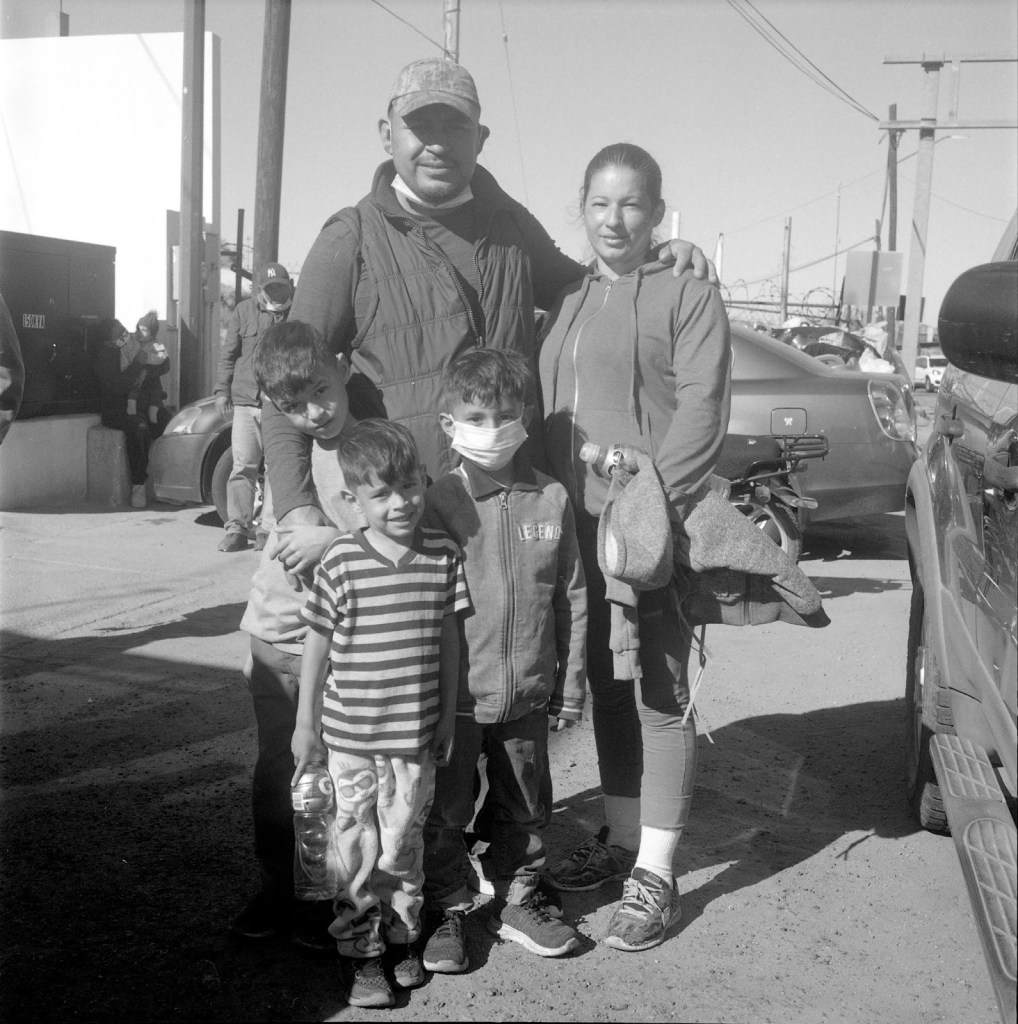
These missionaries have evangelized me. They have reminded me that migration is natural in creation. Creatures migrate to live. Migration has always been part of the human experience, and, from a Catholic perspective, people have the right to migrate. I’ve encountered too many people who don’t have the choice to stay in their homes because of violence, intergenerational poverty, climate crisis, government oppression, and/or organized crime. The difficult decision to leave behind all they know and care about is motivated by searching for a better life for their families. Most people I know with privilege who have migrated are motivated by the same reason.
These missionaries have witnessed to me that by moving beyond what we know we learn who we really are. By leaving the familiar we learn about the world around us and beyond us, the beautiful and the brutal. And the people I’ve encountered who have been forcibly displaced have witnessed a faith and resiliency that has made me cry.
For those who arrived in the U.S., they witness perseverance and hope through their hard work, like Juana*, who brought her two young children with her from Venezuela, one with special needs. She lives now in Chicago, in fear. My sense is that it will be a long time before she ever feels like she’s “arrived” or is “at home.” She never migrated for herself. She did it for her children who will hopefully benefit from all she’s done and will continue to do to make their lives better. Her selflessness is not unique to the migrants I know.

These missionaries of hope remind me of my Franciscan call to be a pilgrim and stranger in this world; they show me what detachment, journey, hospitality, presence, and utter dependence on God looks like. They’ve called me to accompany them and I’ve experienced the joy and grace of these encounters.
Upon reflection, maybe I have the hope I need to face 2026.
*name changed for safety
Read more by this author and more about immigration at our web site.
ABOUT THE AUTHOR
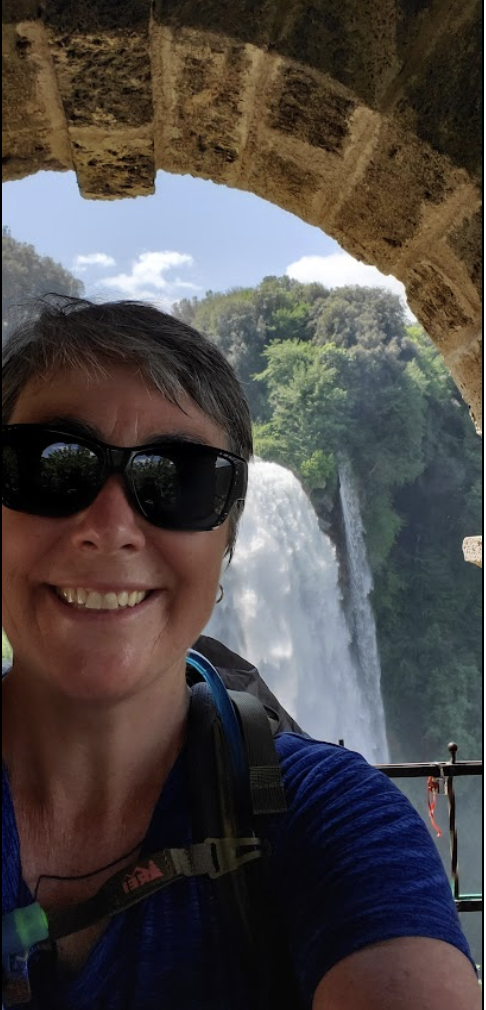
Franciscan Sister of Perpetual Adoration (FSPA) Eileen McKenzie has ministered as a nurse, clinical researcher, acupuncturist and, from 2018 to 2022, president for the FSPA community. She currently serves the social justice mission of her congregation as a member of their Anti-Racism and Truth and Healing Teams, working to dismantle white privilege, colonialism and responding to the congregation’s history of administering a Native American Boarding School in Odanah, Wisconsin. At this time in her life she is accompanied by people in migration through the Kino Border Initiative, a bi-national, inclusive Roman Catholic organization whose vision is migration with dignity. She can be reached by email at emckenzie@kinoborderinitiative.org.
You must be logged in to post a comment.