A long hope for a just peace in Israel and Palestine
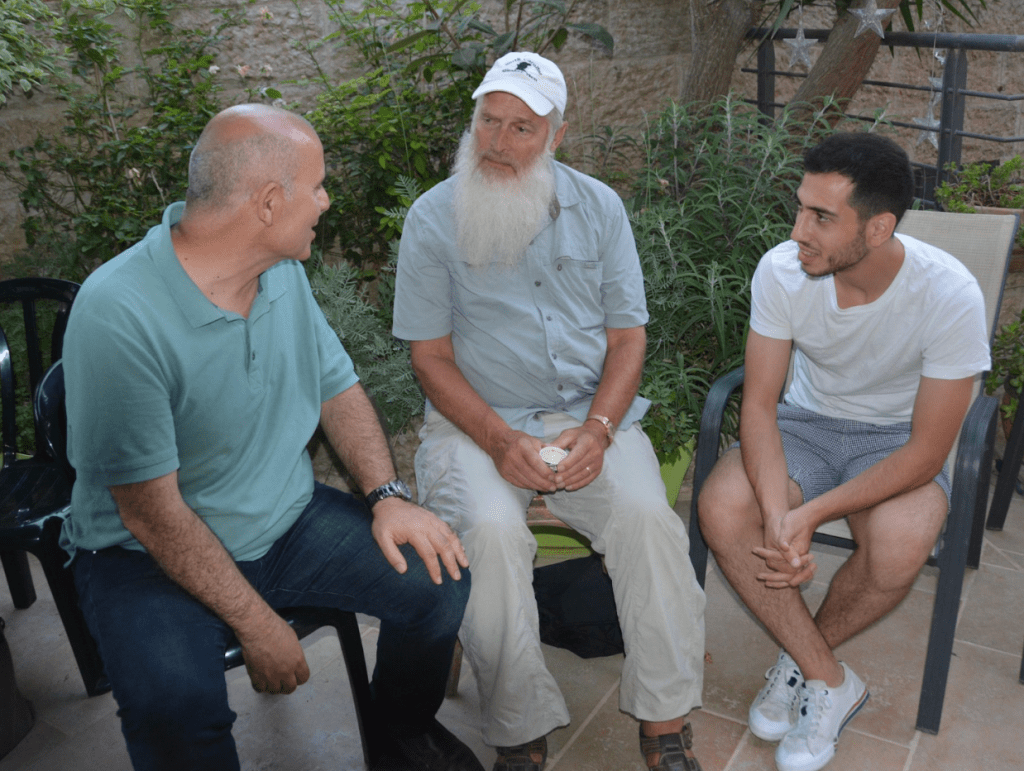
My heart is torn in two by the situation in Palestine and Israel. Every day the situation sounds more dire and I feel more helpless. In seeking for some clarity I reached out to my former Quaker campus minister at Guilford College, Max Carter. He lived and served in the Palestinian West Bank in the early 1970s, and since then has travelled back with groups many times. He has also written three books related to the area.
I recorded his poignant perspective here. We also recorded a conversation on video; you can find a link below.
Share about your personal connection with Palestine.
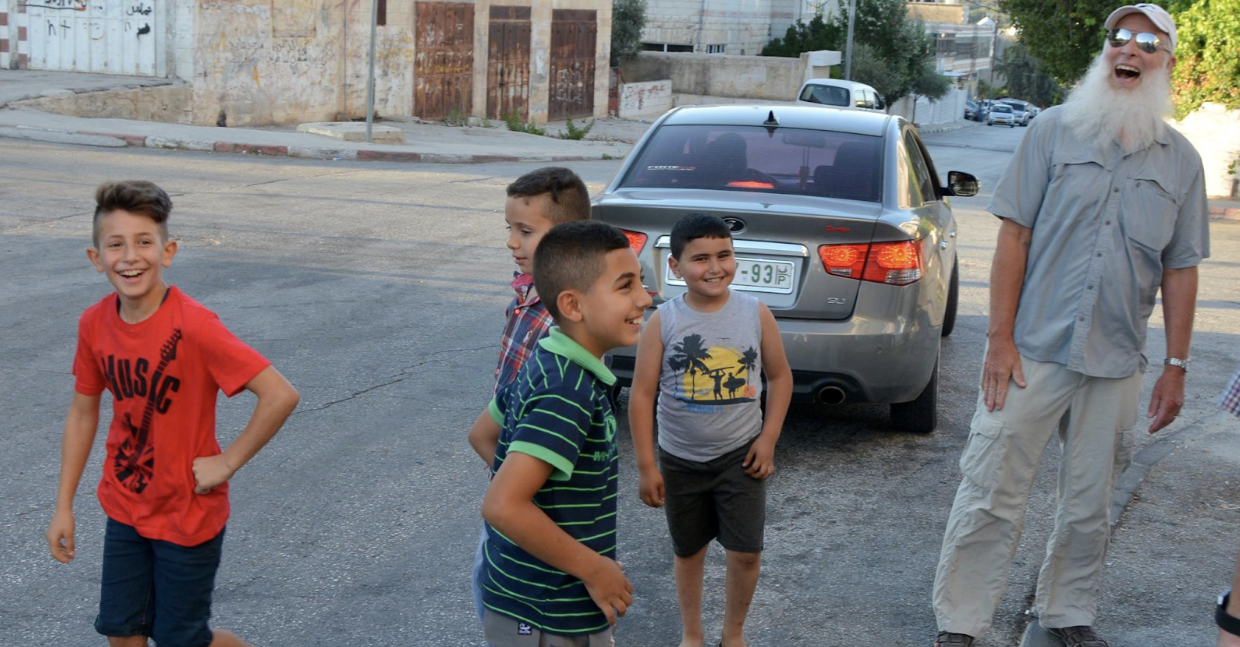
I was a Vietnam era conscientious objector and did my alternative service teaching at a Quaker school in Ramallah, Palestinian West Bank, 1970 – 72. Since then, I have made more than three dozen trips to the area, mostly as a co-leader with my wife Jane of Quaker service-learning groups that volunteer at the Ramallah Friends School and meet with Palestinians and Israelis to learn about the situation. I have written three books related to Palestine and Israel. One is Annice Carter’s Life of Quaker Service (with two cousins), a biography that focuses on her 14 years teaching in Palestine between 1929 and 1967. The other two, Palestine and Israel: A Personal Encounter, and Palestine and Israel: Understanding Encounters, cover my experience there from 1970 to 2024.
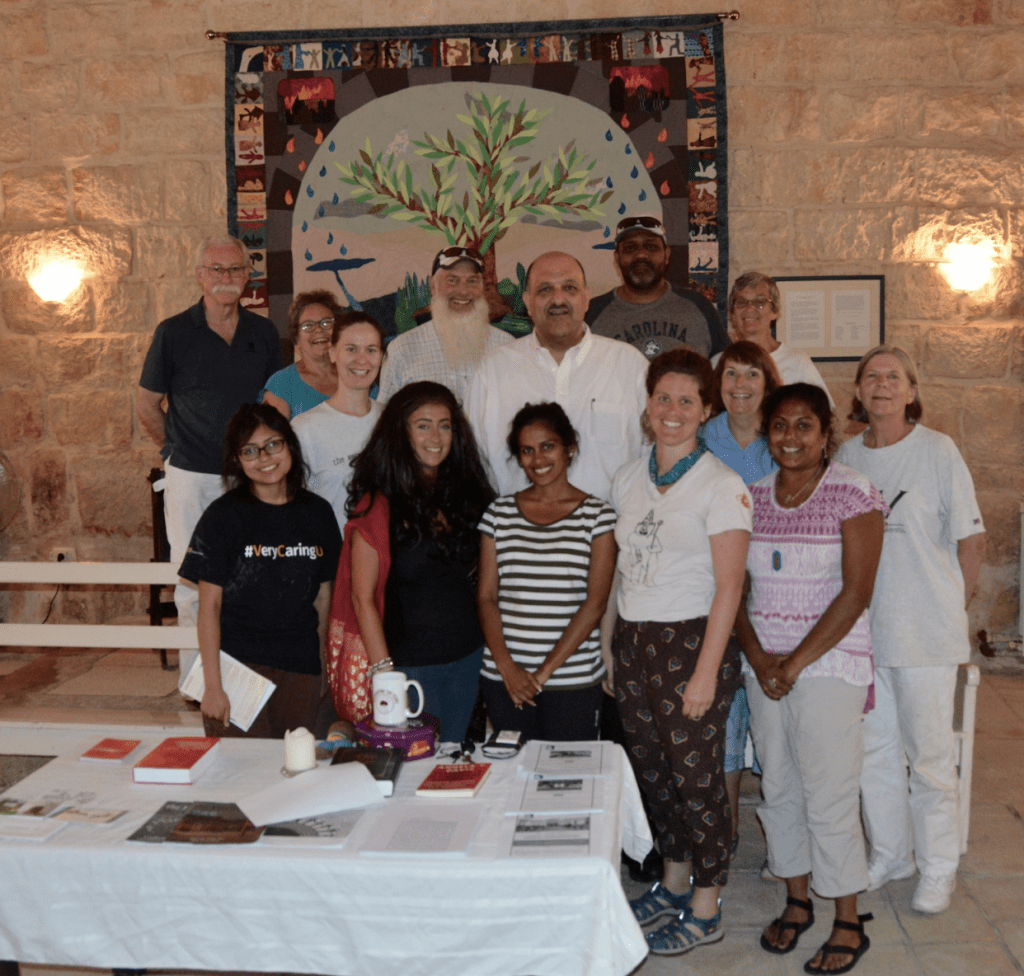
We see our annual trips as a “ministry of accompaniment.” We do some volunteer service at the Ramallah Friends School and on a Palestinian farm outside of Bethlehem, but mostly we listen, learn, and seek to support those doing the hard work of seeking a brighter future in the region, one marked by equal justice for all. One of the great joys of this ongoing work has been making connections with families who have chosen to send their children to Guilford College, where I taught from 1990 to 2015. Becoming those students’ surrogate parents (and now grandparents!) while they are at the College has been a real joy. Over the past 25 years, there have been more than three dozen, including three sisters from one family!
What do Americans most need to know about the current war there?
One of the most important things to know is that the current situation did not begin with the Hamas attack on October 7, 2023. One has to understand the history of European colonialism from the late 1800s into the 1900s; the establishment of the modern state of Israel in 1948 that displaced 750,000 Palestinians from their homes in 78% of British Mandate Palestine; the 1967 war that gave Israel control over the remaining 22% of Palestine; and the ongoing military occupation. Without understanding that history, one can’t understand the issues at play in the current conflict.
Another matter of importance is to understand that “war” and even “conflict” are not adequate words to describe the situation. Israel is one of the greatest military powers in the world, and certainly in the Middle East. They are a nuclear power with the latest in military hardware and technology in their army, navy, air force, and special intelligence. With few exceptions all Jewish Israelis are required to serve upwards of three years in the military, followed by reserve duty for several decades. Meanwhile, Palestinians have no army, navy, or air force; 98% of the population has never owned a gun; and all Palestinians are under a military occupation that controls every aspect of their daily life, including freedom of movement.
What can we do as people of faith?
Inform yourselves about the history of the region. If possible, go on one of the faith-based trips to both “sides” and listen to the Israelis and Palestinians working for a just peace. Once informed, support those people and organizations doing the hard work of peacemaking through prayer, financial support, informing others, contacting elected officials, and advocating for a just peace that will be equitable for all who are living “from the river to the sea.”
Especially as Christians, it is vital to understand the impact of Christian Zionism and how it has an enormous impact on U.S. foreign policy. Support of Israel is couched in the biblical terms of “they who bless Israel will be blessed, and they who curse Israel will be cursed.” But one must distinguish between the “Israel” talked about in the Bible and the modern nation-state of Israel. Furthermore, it is important to understand the nature of the apocalyptic theology of many Christian Zionists. It is connected with an understanding of the apocalyptic passages in the Bible that mandate for them full Jewish control of historic Palestine in order for the Temple to be rebuilt as a key component in the anticipated “Second Coming.” To say that theology has problems is an understatement!
Tell us more about your relationships with people in Palestine.
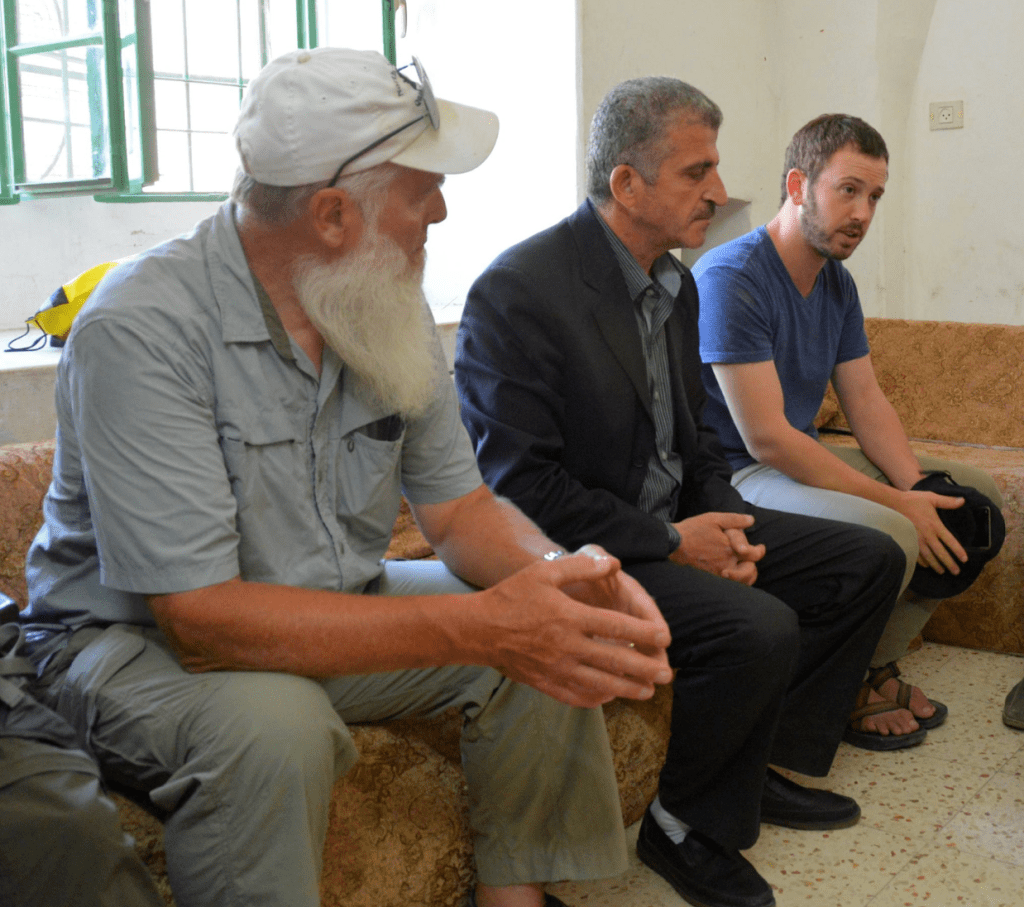
One of the places we visit on our annual service-learning trips is the Nassar Farm outside of Bethlehem. A Palestinian Lutheran family, they hold title to their 100 acres since Ottoman times but are in an area totally controlled by Israel (Area C) and surrounded by several settlements that covet their land. Israel has demolition orders on all their above-ground structures; do not allow any utilities; cut off their access road; and over the past 25 years have had 25,000 of their grape vines burned, thousands of their fruit trees destroyed, and have been physically assaulted. I have volunteered with others to re-plant some of those vines and trees. I am amazed by their resilience, their incessant hope, and their commitment to follow the way of Jesus. At the entrance to their farm is a stone that in several languages says, “We refuse to be enemies.” And they live that out.
From our friends at the Nassar Farm, we have learned the meaning of the Arabic word “Sumoud” — steadfastness. For them, it means being rooted in the land as generations of Palestinians of Jewish, Muslim, and Christian faith have been for millennia. It is symbolized by the olive tree, a resilient tree that thrives in the harsh weather and rocky soil of the area, deeply rooted, giving an abundant harvest of fruit that sustains in so many ways and living often for hundreds and thousands of years.
Sarah: Thank you Max, for sharing your words of wisdom. Like the olive tree may we live with long hope for a just peace in Israel and Palestine, as well as throughout the world.
Here are some organizations Max suggests for connecting, supporting, and learning more:
https://pilgrimsofibillin.org/ Pilgrims of Ibillin — The support group for Abuna Elias Chacour’s work.
https://fotonna.org/ Friends of Tent of Nations — The support group for the besieged Nassar Farm outside of Bethlehem.
https://www.breakingthesilence.org.il/?tztc=1 Breaking the Silence — The organization of Israeli military veterans working to end the military occupation.
https://www.rfs.edu.ps/en Ramallah Friends School — The Quaker school in Ramallah.
You can read more by this author and more about the conflict between Israel and Palestine at our website.