
Kent Monkman: Telling the truth through art
In the gospels, Jesus tells us to go into the world and spread the good news. This desire to convert non-Christians was distorted by popes and many Catholics in the 15th and 16th-centuries. The doctrine of discovery, papal bulls that legitimized colonization, were written with lots of religious justification.
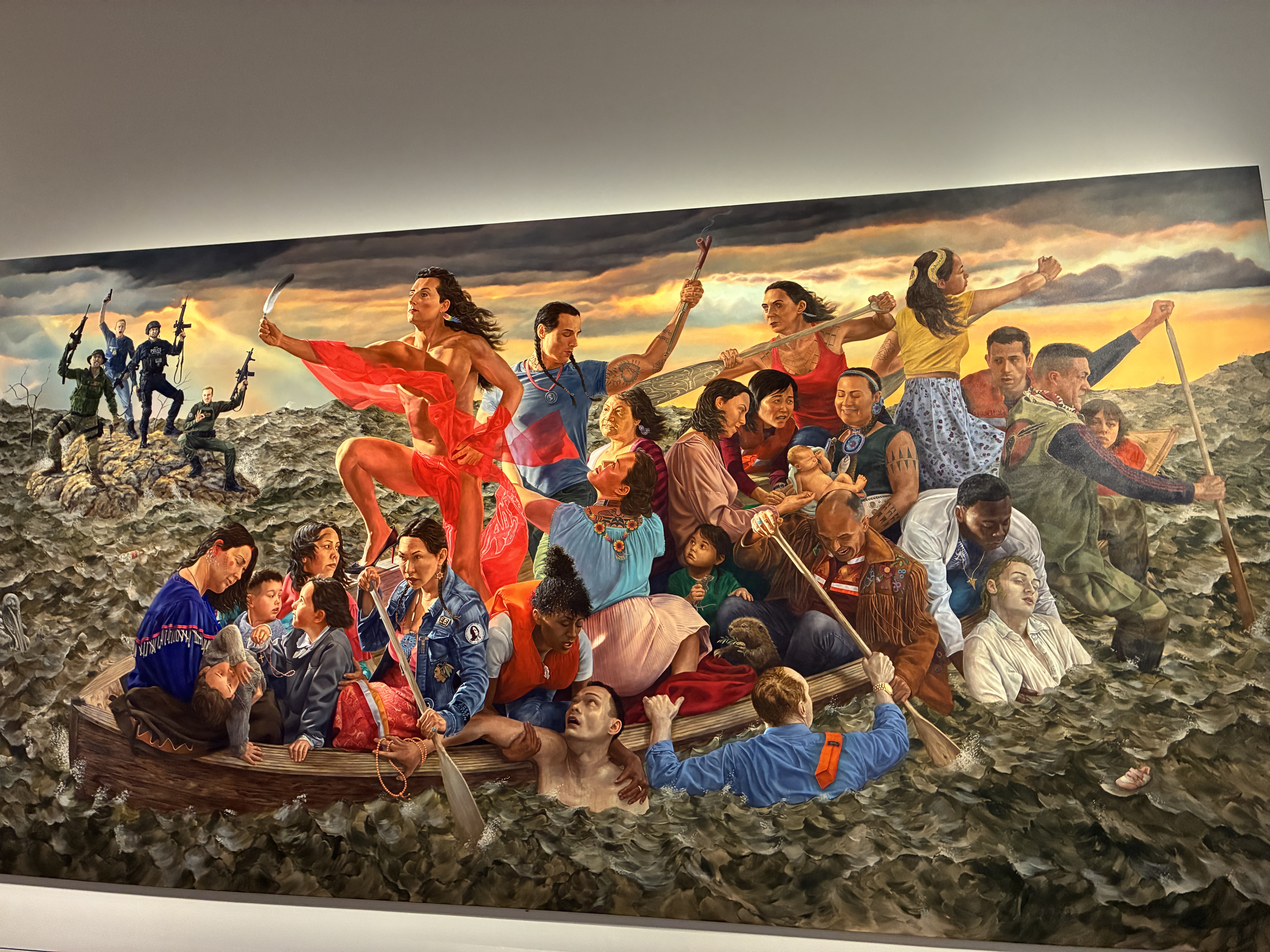
In June, I went to an exhibit at the Denver Art Museum featuring 41 paintings by Cree artist Kent Monkman called History is Painted by the Victors. The paintings are stunning—colorful, detailed, action-filled, dramatic paintings telling stories of colonization, using the imagery of European-style paintings, reclaiming the narrative.
Though many of the paintings depict the horrors and violence of colonization by white settlers, Monkman’s commitment to justice and love seeps from the works. Monkman’s skill as a painter is incredible—the level of detail, human expression, drama, light, and color made me want to look at each painting for hours.
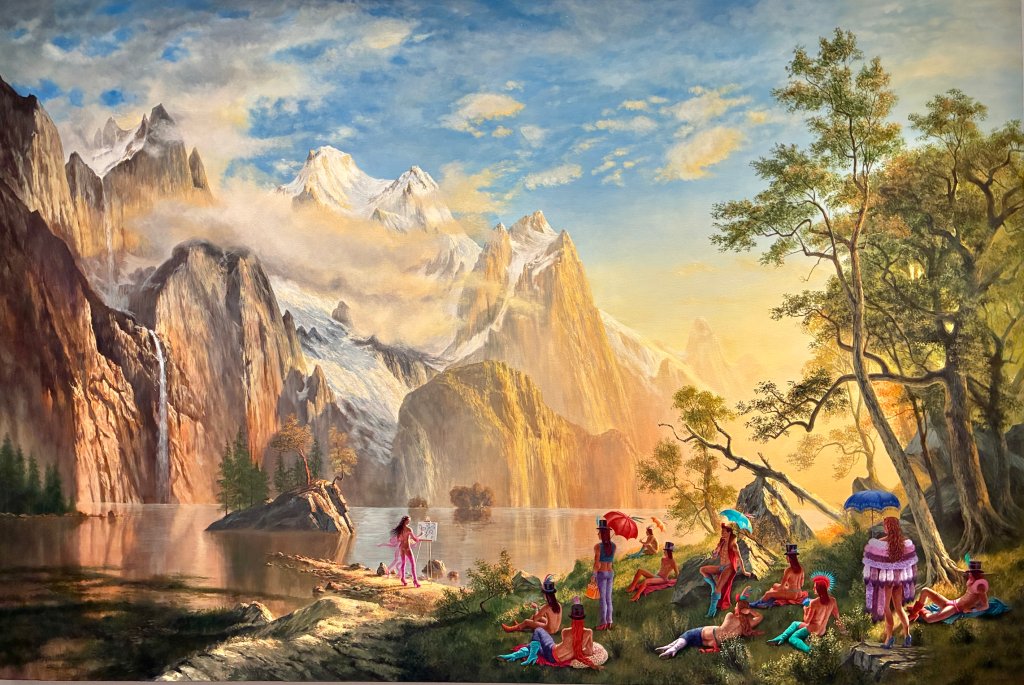
When European settlers came to the American West, they painted the landscapes they saw in mystical, sweeping representations—an overexaggeration that touched on fantasy. Albert Bierstadt’s paintings from the 1800s evoke towering fortresses of mountains that look like they came from a Disney movie. They are breathtaking, unblemished lands, heaven erupting out of the skies.

These works, though beautiful, mythologized the West and fostered the idea that these were empty lands open to European settlers. Monkman does a fantastic job at flipping this on its head—he recreates Bierstadt’s landscapes but includes Indigenous people and white settlers inhabiting them, creating “dialogues between different kinds of work across periods of time,” he said.
White artists in the 19th-century also painted Indigenous people who they encountered in North America. George Catlin, for example, painted portraits, such as “The White Cloud, Head Chief of the Iowas.” Monkman takes Catlin’s paintings—the people and dramatic scenes depicted in them—and reimagines them.
There’s a central recurring character in many of the paintings in the exhibit: Miss Chief Eagle Testickle, Monkman’s gender-fluid alter ego. She is muscular and wears black stiletto heels, traveling through time in the paintings, defending and rescuing her people from the violence of white settlers.
In his painting “The Scream,” white priests, nuns, and military officers kidnap Indigenous children. The children are wearing blue jeans and t-shirts. Some run away, others scream with their mothers clutching their limbs. The house in the background could be found in any neighborhood today, reminding us that this generational trauma continues to impact people and was not so long ago.
Right now, Oak Flat, a sacred Apache site in Arizona, is urgently at risk of being destroyed due to the public lands being transferred to a copper mine (as Mary Bishop recently wrote about in Messy Jesus Business). Catholic sisters, like Kristin Peters, have shown solidarity with Indigenous people in joining the Apache in prayer and protest.
Many Catholic sisters have responded to the cry of the earth and of their Indigenous neighbors by engaging in land justice movements, returning or sharing their lands with Indigenous people. Though as Catholics we are inheritors of the violent traditions of the doctrine of discovery, boarding schools, and colonization, these women religious communities are showing what it might look like to leave a different legacy, to be “complicit no more,” as many of the sisters’ signs at Oak Flat said.
In a small but powerful way, they are embodying the good news of the gospel, which is one of life—“I came that they may have life and have it abundantly,” Jesus says (John 10:10). For justice and life to flourish, reparations are needed.
In 2023, Pope Francis and the Vatican repudiated the doctrine of discovery. Never again, Francis said, “can the Christian community allow itself to be infected by the idea that one culture is superior to others, or that it is legitimate to employ ways of coercing others.”
The gospel good news rejects hatred, violence, coercion, and superiority. It even rejects the idea of being a victor. Christ tells us to be peacemakers, and for our lives to bring God glory—lives of justice, simplicity, sacrifice, and love of neighbor.
In Monkman’s “The Sparrow,” an Indigenous child, with their hair cut short, stands on tip-toe in their residential school bedroom, trying to touch a bird on the open windowsill. The light is bright and blue and quiet. The painting is imbued with sorrow and rage and grief and loss and pain—they are living in a kind of prison—but a tiny birdsong of hope and truth remains with the children, that which the white settlers and empire can’t take away.
Maybe the good news Christ calls us to today is to practice living a love that says no more death and no more greed. A love that uplifts the oppressed, a love that tells the truth, a love that urges us to work toward a world where all people are set free.
History is Painted by the Victors is on display at the Denver Art Museum through August 17. Art has the power to change narratives and help educate. How can we use our gifts, like Monkman did, to further fight for and advocate for life and truth?
Read more by this author or more about faith in art at our website.
ABOUT THE AUTHOR

Cassidy Klein is a journalist, writer, and editor based in Chicago. She has worked as an editorial assistant at Sojourners magazine and U.S. Catholic magazine. She grew up in Denver, Colorado and studied journalism and philosophy at PLNU in San Diego. Find more of her work at cassidyrklein.weebly.com.


One Comment