
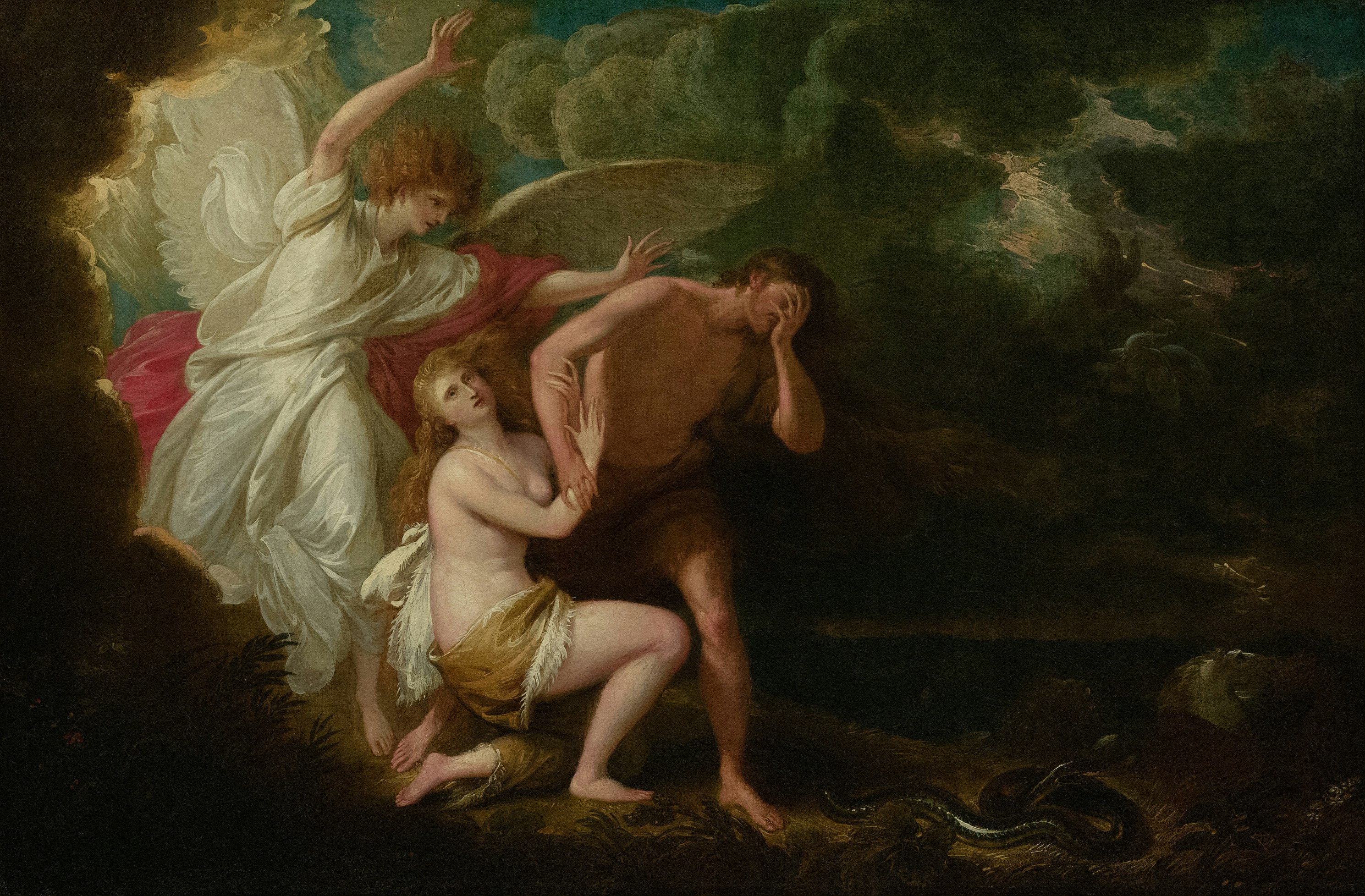
Scapegoating Eve
I’ve been thinking about misogyny and the church even more than usual. A week ago, an ICE agent shot and murdered a woman named Renee Good, without reason or provocation. Days later, men who identify as Christian continue to defend the murderer, mock the victim, make jokes about her death, and say that she was “asking for it.”
It doesn’t take a theologian to say these men are behaving the opposite of how Jesus taught us to act. Nevertheless, they were formed in institutionally Christian spaces and by ideas they claim are Christian. One of those ideas is the belief women were created by God to be subordinate to men.
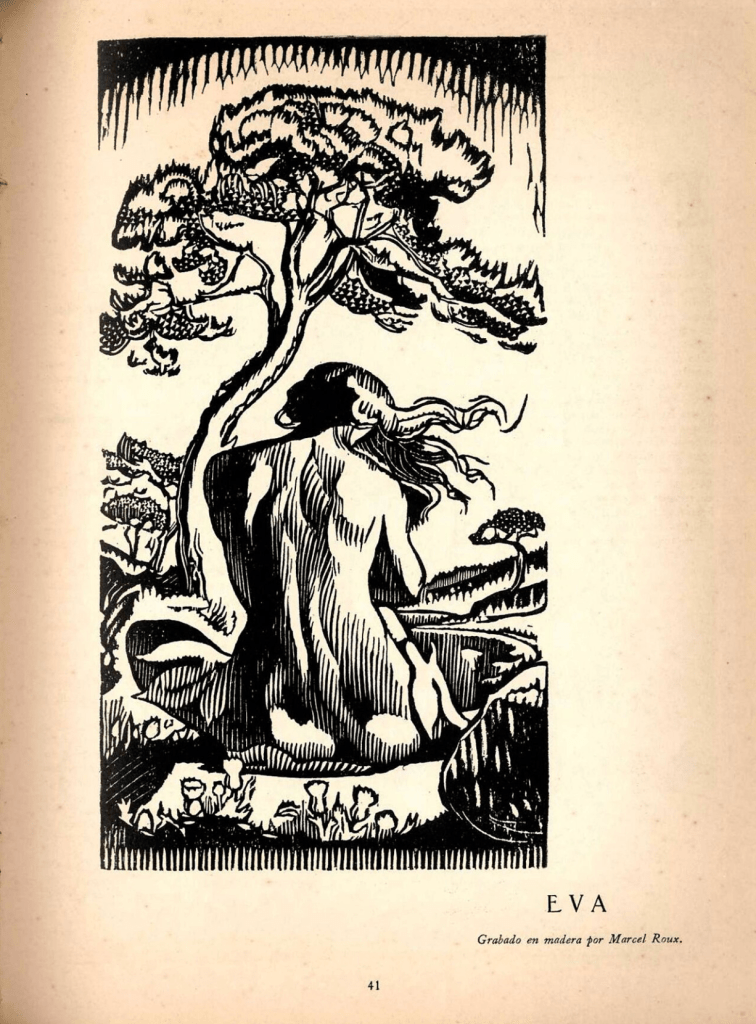
Many people of faith understand that misogyny is contrary to genuine gospel values. But despite this, it’s not a bug but a feature of entire Christian traditions. Across history, various Christian communities and cultures have been structured on the notion that male dominance is God’s will. The belief goes back to the earliest days of the church and is woven into some of Christianity’s most central creeds.
We need to disentangle it.
A favorite passage for patriarchal proof-texters is the second creation story in Genesis, when Adam and Eve disobey God and eat from the tree of the knowledge of good and evil. That passage is also foundational for Christian beliefs regarding creation, sin, and redemption.
The patriarchal argument is that Eve was supposed to be obedient, that her disobedience brought sin into the world, and thus women should be subordinate to men if they want to be virtuous. Such interpretations of Eve’s story make her the scapegoat for all human wickedness and give violent and abusive men an excuse for oppressing women.
A grim irony is that over the centuries, as men ruled the world, they waged wars and carried out genocides, then blamed women, whom they’d deprived of power, for humanity’s sinfulness. Despite ascribing to the “atonement theory” of salvation, which asserts that Jesus’ death erased the debt we owed to God, men want to keep making women pay that debt for them.
Even today, commenters persist in reading the Genesis story as one of female unruliness against male authority. And women get in on the misogyny too. Susan Skinner, in a 2018 article for Catholic Stand, speculates that Eve only knew about the prohibition on that particular fruit because Adam told her. “Adam’s relationship with God was deeper and longer. He was her Guardian,” she writes. “It should have been enough for her to know not to disobey God at the word of her husband.”
The Genesis account tells us Adam was right there, however. After eating the fruit, Eve gives some to her husband, “who was with her.” Some traditionalist Catholics, including Charles Pope and Scott Hahn, argue that Adam was already failing, since he let the woman take the lead in negotiating with the serpent, instead of assuming his rightful God-given authority.

Immediately after eating the apple, Adam blames Eve. His very first sinful impulse is to deny his own responsibility and heap the blame on the woman. That sinful impulse reverberates through scripture and human history, until today. Men blame rape victims for tempting them. They blame abuse victims for provoking them. I’ve even seen men blame girls, children, for tempting the adults who prey on them.
So of course they blame Renee Good for being murdered. Good did not fit into the patriarchy’s narrow definition of a virtuous woman, which has nothing to do with morals, or holiness, but with a misogynistic reduction of women to objects for male use and pleasure. According to the patriarchy, Good was disrespectful and out of line. And since she was a lesbian, she chose to place herself outside the framework of patriarchal marriage.
Patriarchal interpretations of the Eden story perpetuate such ideas. But the big glaring hole in their account is that Eve sins not by disobeying men, but by disobeying God.
The Genesis story doesn’t say Adam was supposed to rule over Eve. The story calls them equals (“bone of my bones and flesh of my flesh”). Unfallen, still sinless, Adam and Eve are equally competent to make decisions. Male dominance doesn’t emerge until after the fall. In Genesis 3:16 God says to Eve: “Your desire shall be contrary to your husband, but he shall rule over you.” Men’s domination of women is a result of the fall. It is the outcome of sin, a curse.
Other stories in scripture also upset the idea that virtuous women obey men.I wrote recently, forU.S. Catholic, about the unruliness of the great women of Hebrew scripture. From Sarah to Rebekah to Abigail, the women of the Bible who advance God’s plan do so by violating patriarchal power structures.
Of course, the Genesis story is not sociology, nor psychology nor data. It’s sacred myth. But sacred myths can be profoundly formative for how we envision ourselves and others, and how we act in the world. Too many Christian men look at women through the filter of misogynistic bias. And look how easily they slip from asserting that women must be obedient, to praising a man who murdered a woman for her disobedience. Bad interpretations of the Bible are not just stupid. They’re deadly.
In a few weeks, Christians will begin the journey of Lent, in which we join Jesus in his journey to the cross, deepening our spirituality, choosing solidarity with the downtrodden, and doing penance for our sins. Then, on Good Friday, we commemorate Jesus’ death at the hands of violent empire. Finally, on Easter Sunday, we celebrate Jesus’ defeat of sin, and his liberation of humanity from sin and from sinful structures.
How can a Christian community gather and celebrate Jesus’ resurrection from the dead, when they keep pounding the nails into Eve, making her the scapegoat for all humanity’s failures?
As they pierce her hands and feet, as they stab her and shoot her, they will say they have no choice. She asked for it, they’ll say. She scared them, they’ll say. They’re only punishing her, they’ll say, because she was sinful.
This Lent, joining Jesus in solidarity with the oppressed may mean real risk and real sacrifice. But however the weeks ahead unfold, one way we can let this season shape us is to pledge to eradicate misogyny from our own minds and hearts. Even as women, this can be a fruitful exercise, since many of us have internalized warped notions about who we are and what we’re called to.
Some resources for people of faith who want to commit to a project of deconstructing misogyny:
After the Death of God the Father, by Mary Daly
Mary, Mary, quite contrary, by Elizabeth Johnson
Feminism and Religious Identity by Ivone Gebara
Nevertheless, We Persist: A Feminist Public Theology, by Rosemary Carbine
No Crystal Stair: Womanist Spirituality, by Diana Hayes
The Mystics Would Like a Word, by Shannon K. Evans
Was Mary a feminist? A conversation with Julie Hanlon Rubio
For more by this author and more about patriarchy, see our web site.
ABOUT THE AUTHOR

Rebecca Bratten Weiss is a writer and academic residing in rural Ohio. She is the digital editor for U.S. Catholic magazine and can be found at rebeccabrattenweiss.com.


