

The holy urgency of hospitality
Recently I spent several weeks out of town, as a guest in the home of some of my friends. A family member had a major surgery and it was a privilege to be present during the recovery. I decided to walk to the local Catholic Church and attend daily mass – nothing too unordinary for me to do while I travel. It’s probably no surprise that I love attending mass and visiting different churches.
To my great disappointment, the Church that I visited didn’t feel like home. Before I went inside, I noticed a woman entering in front of me with a Tradwife ascetic. Aware of my ordinary clothing, my body tensed with insecurity. As I approached the sanctuary I smelled incense, heard chanting, and saw other women kneeling in the pews dressed in a similar style of clothing to the woman I saw earlier. I wondered if it was OK that I was there.
There have been other times in my life when I’ve felt insecure at a Catholic mass (see chapter 24 of my memoir For Love of the Broken Body, for example), but there was much more about my visit to this local parish that caused me to feel unwelcome. While I was there, no one greeted me, no one oriented me to the local customs, and no one shared how I could pray and sing along with the worship music. At one point, I left the sanctuary and went to the entryway looking for a worship aid and had no luck finding one. When I went up to communion, for the first time in my life I had to ask the person in line behind me what I was supposed to do because the customs of the parish were so unfamiliar to me. Now, I greatly appreciate tradition and reverence in a Catholic liturgy, but what I value more is that people who come through the doors of a Church are warmly received and included. Anything less than hearty hospitality in a Catholic community is sinful.

Poor hospitality is a grave assault to God because it is God’s nature to gather, share, welcome, provide, love, forgive, and unite. As children of God, we are called to imitate our Maker. So, when a stranger enters our place of worship, or any other communal space that we have come to know and possess, it is our privilege to greet them with affection and receive them as a holy guest. Although this is a religious principle, its implications ought to inform the systems of civil societies, too. The flourishing of a society is contingent on its ability to welcome and include those who are different. Closed and inhospitable systems and societies tighten their rigid ways so much that they prevent healthy development and growth, leading themselves toward decline and the spiral of death.
On the other hand, evil’s nature is to divide, confuse, lie, and stir up fear. And the opposite of welcome is division, closure, and control. It’s sinful to rebuff the other when we aren’t comfortable with who they are. If our preferences, customs, or prayerful attention to God moves us away from loving our neighbor—and honoring the presence of Christ in them—then we are rejecting the totality of God’s holy presence.
In his Message for the World Day of Migrants and Refugees last month, Pope Leo proclaimed, “The widespread tendency to look after the interests of limited communities poses a serious threat to the sharing of responsibility, multilateral cooperation, the pursuit of the common good and global solidarity for the benefit of our entire human family.”
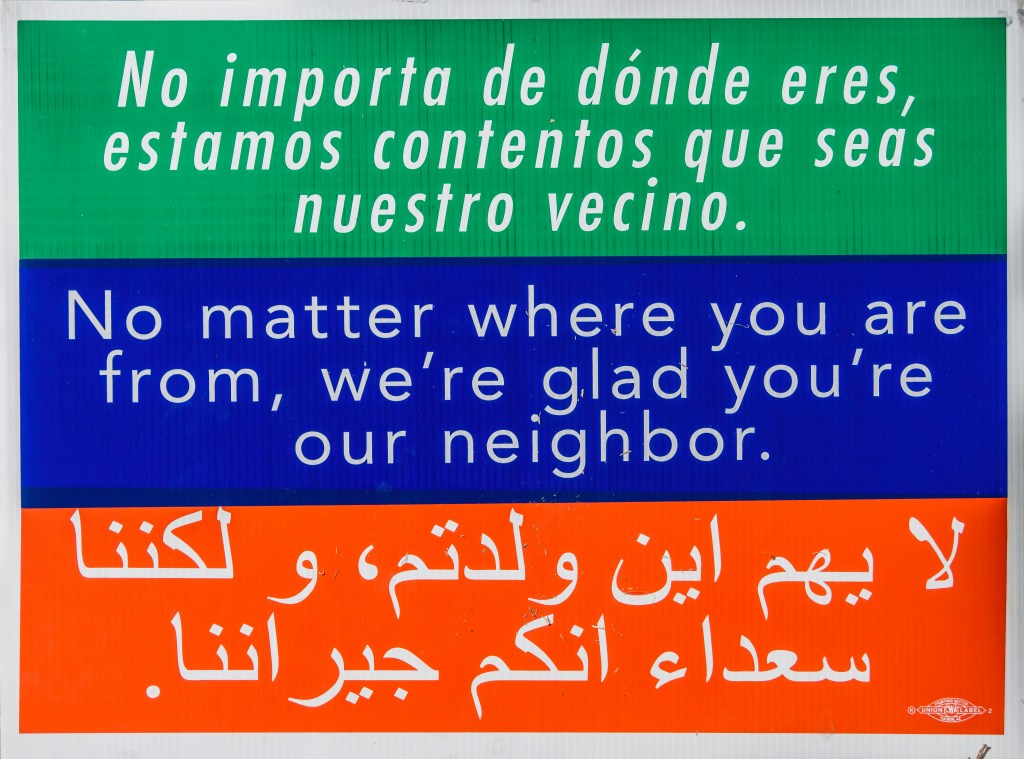
In the same message, Pope Leo also insisted “In a special way, Catholic migrants and refugees can become missionaries of hope in the countries that welcome them, forging new paths of faith where the message of Jesus Christ has not yet arrived or initiating interreligious dialogue based on everyday life and the search for common values. With their spiritual enthusiasm and vitality, they can help revitalize ecclesial communities that have become rigid and weighed down, where spiritual desertification is advancing at an alarming rate. Their presence, then, should be recognized and appreciated as a true divine blessing, an opportunity to open oneself to the grace of God, who gives new energy and hope to his Church: ‘Do not neglect to show hospitality to strangers, for by doing that some have entertained angels without knowing it’ (Heb 13:2).”
It doesn’t matter who we are welcoming, if they share our faith tradition or not, hospitality is messy. Just as it can be uncomfortable to be a visitor – or a new resident – in a new place, it can stretch a host to adjust to a new person and their needs. Yet, we live in a redeemed world, not a fallen one, and God’s grace can buoy us through the risk and discomfort. We choose to be guided by love and hope, not fear. It’s actually the Gospel way to be reckless with love, to sacrifice the self for the sake of the other. We make room and share because it is the way of the Incarnation: Jesus gave totally of himself for others. We see this in his friendship with those on the margins and his nonviolent acceptance of the cross. This is expressed in the Catholic sacramental life, too. The Holy Eucharist reveals how the holy is blessed, broken, and shared to unite all into one body.
When we welcome a stranger into our worship community, our neighborhood, our home, or our nation, we act with the love that God commissioned us with. Gestures of hospitality not only define our mission and identity, they also form and remake us, expanding our vision, our life. Hospitality and the call to welcome others is holy and, during these divided times, urgent, too.
For more about hospitality or more by Sr. Julia Walsh, visit our website.
You must be logged in to post a comment.