
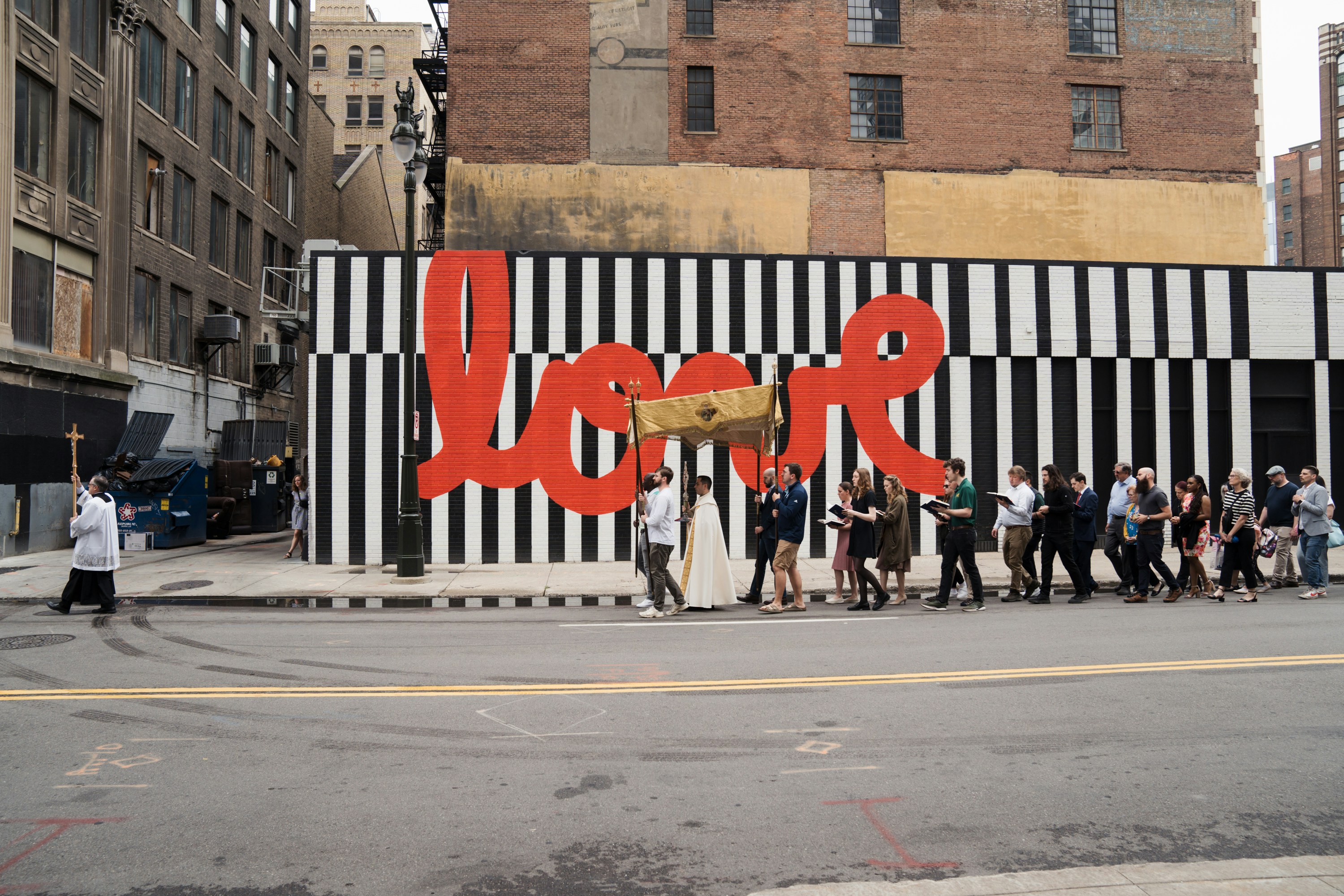
There are no words
“There are no words,” she tells me.
As she sits on the couch across from my chair, she nevertheless fishes for the box of tissues to curb the tears and salvage some words from the inner devastation she experiences. As a social worker and psychotherapist, this is familiar territory for me. What makes this time different is that the person I am sitting with is also in a helping profession. And at her job, she contends with those who routinely treat the vulnerable persons she serves with cruelty, leaving her to mitigate the damage, the retraumatization. Today, she tells me of an unhoused woman who was denied her benefits upon discharge from their program.
My companion is in awe, and not the good kind. The kind that strikes us dumb and leaves us at a loss for how to respond. I know this kind of awe. Maybe you do, too.
On the other side of the world an assembly chants, “thank you,” to US government leaders for ostensibly ending a war that has left Gazans without homes, without food, without life, and setting the stage for a new chapter of occupation. There are no words.
In my city of Chicago, an apartment building is raided in the middle of the night. Immigration agents pull residents from their homes undressed, zip-tie their wrists, question them for hours. They separate children from their parents. All in an attempt to purge reported terrorists. There are no words.
On my heart, an elder friend dies, and her daughter buries her before sharing news of her passing with others. It is her right. She was there; we were not. And yet. There are no words.
Wonder and Awe, also known as Fear of the Lord, is the ultimate gift of the Holy Spirit. Catholics focus especially on the conferral of these gifts as we celebrate Confirmation, the final Sacrament of Initiation. And while I was confirmed as a young adolescent, I can say that I have utterly failed in accepting the fear-filled part of the gift, a piety that centers aversion to offending our God. No, I reserve that awful awe feeling for encountering the lack of goodness in the human heart, for witnessing a world so seemingly bereft of God.

When I feel most awful, attending a local monthly Taize-style prayer service can be somewhat of a balm. The musical refrains are simple, encompassing faith and hope. The gathered join their voices in song, each holding a lit candle, each perhaps holding onto something for a person beside them who cannot.
Once we plant our candles in bowls of sand encircling the altar, the music gradually gives way to silence. The worship aide reads,
“When we try to express communion with God in words, we rapidly reach the end of our capacities. A fairly long period of silence to listen to the voice of God deep within, therefore, is essential in discovering the heart of prayer.”
The end of our capacities, I think. Another description of awe.
Today, I lie face down on the bed, ashamed of the writer’s block that has this blog submission so late. My mind seems to be at the end of its capacities. And perhaps it is still enough to let God in.
Communion, co-union, a way to the goodness, the God-ness within ourselves.
A reclaiming of our role as co-creators with God.
Is it that I only see destruction in the world around me, or is it that I forgot that the work of creation is not complete yet, that God relies on me, on us, to continue it?
Perhaps in these awe-filled times, the spaces empty of words are places for creativity to take up residence.
For now, thousands of Palestinians are trekking toward what was home, imagining something more than the ruins that await them. “I feel reborn,” said Mohammad Rajab, 33, “Despite all the sadness and the huge destruction, we are looking ahead and thinking about how we will build our lives, our future, our children’s future, and rebuild everything that was destroyed and move away from war.”
On Saturday, October 11, Chicago area neighbors marched to a detention facility to bring our migrant brothers and sisters the Eucharist. Refused entry, the assembled continued to pray outdoors, singing, “Pan de Vida.” I recall words of the refrain, loosely translated to, “Power is for service, because God is Love.”
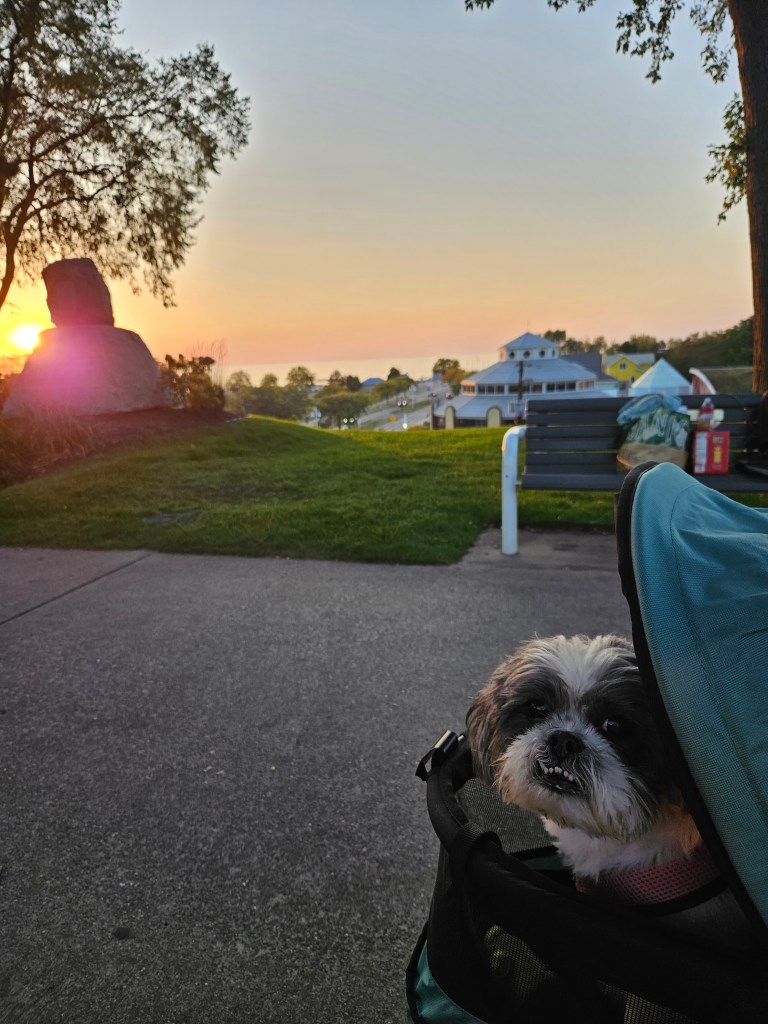
And on a warm weekend day, I pack up the dog and take us to the beach my friend loved most in her lifetime, because she will be more present to me there than beneath the ground. While my dog whimpers for more ice cream, the sunset leaves me speechless.
If the fear-awe is to live with a felt sense of God’s absence, then the wonder-awe is to inhabit a world where the need for words is suspended, because the presence of God is inescapable.
You can find more about Fear of the Lord and more by this author at the Messy Jesus Business website.
ABOUT THE AUTHOR

Angela Paviglianiti was ruined for life in the Jesuit Volunteer Corps around the turn of the century. She is what happens when you mix women’s studies, social work, and seminary. Angela is indebted to Ignatius of Loyola and Dorothy Day, although she probably wouldn’t have gotten along with either of them. She still believes in fairies, and the Gospel according to you and me and us.


One Comment