
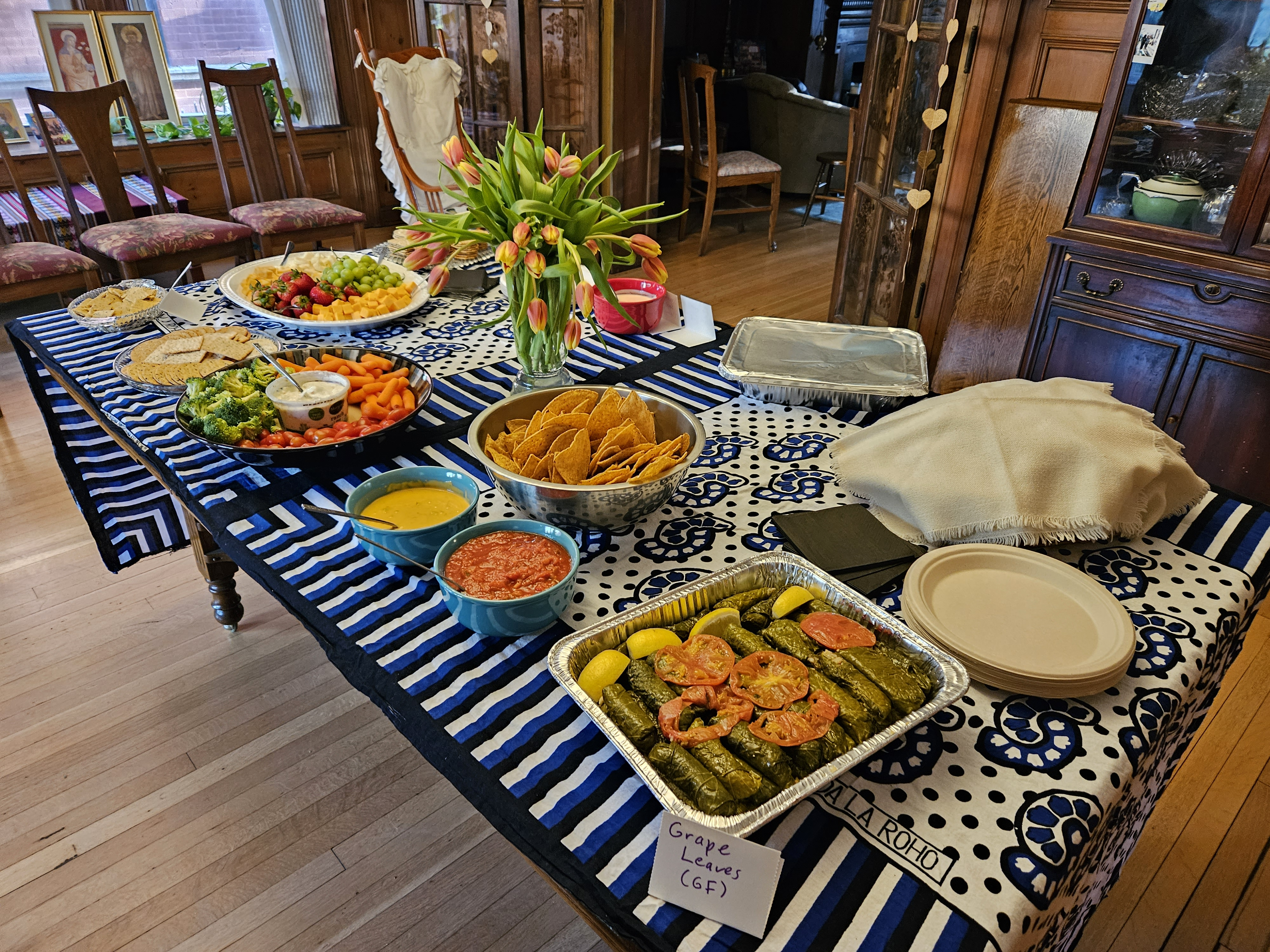
A Feast of Love in the Darkest of Times
The Mass of the Lord’s Supper tonight marks the beginning of the Paschal Triduum, the Church’s celebration of Jesus’ passion, death, and resurrection. Celebrated on the evening of Holy Thursday, it is my favorite night of the year — a radical feast of love in the darkest of times. We wash one another’s sweaty, aching feet, a blatantly intimate act. We share the Eucharist, daring to believe we become Christ’s body, as if for the first time. And we keep watch with him, recalling that Jesus persisted in his mission despite intense fear, and today remains close to us in the midst of our own.
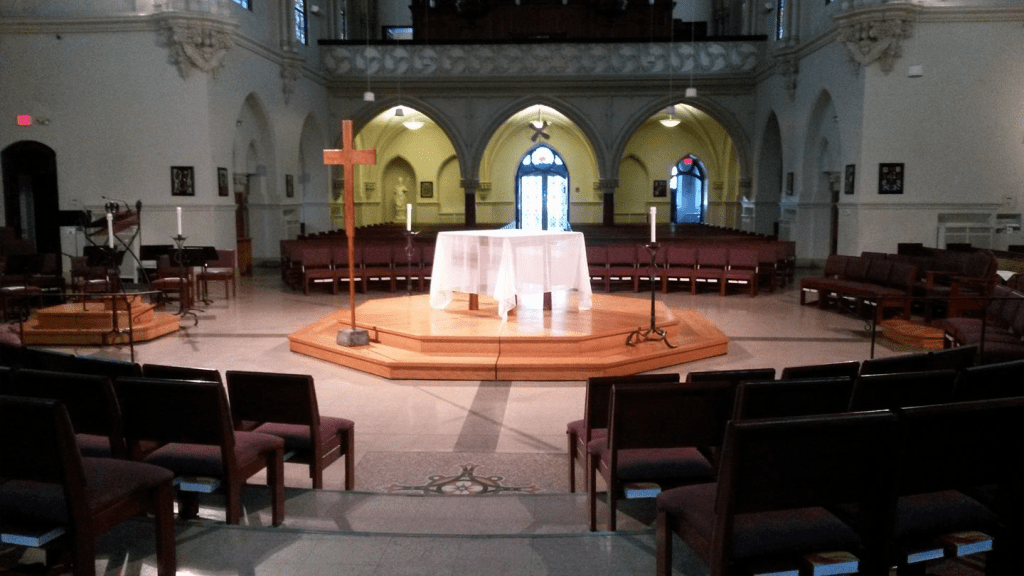
This year more than others, I am hungry for something to celebrate. Despite the young Spring’s growing light, human-made shadows grow ever more far-reaching in my vision. The disciples surely felt this at the approach of Passover, their Jesus brooding and troubled in spirit; something was changing — maybe forever. John’s Gospel tells us, “Jesus knew that his hour had come to depart from this world….Having loved his own who were in the world, he loved them to the end” (13:1). Jesus, like God, knowing what was to come and Jesus, like us, knowing anger, fear, and sadness, told his disciples everything they needed to know to carry on without him. And it is through our celebration of Word and Sacrament on this night that we come to remember it.
“If I, your Lord and Teacher, have washed your feet, you also ought to wash one another’s feet…I give you a new commandment, that you love one another. Just as I have loved you, you also should love one another” (John 13:14,34).
Jesus makes his mandate clear through this unanticipated and somewhat awkward example of performing a very dirty job. Similarly, our love is made tangible through acts of service, perhaps even more so when our work gets messy. For years at my parish, where anyone in the assembly could come forward to wash and be washed, I intentionally volunteered to be one of the persons who carried the dirty foot water outside, emptying the basins into a bucket, and eventually pouring it out with a satisfying slosh to the ground, letting it splatter on my clothes. I busied myself, and conveniently avoided getting my own feet washed. Why even bother to wash them, if we are going back outside again?
In the mess of Christian living, we get dirt on ourselves that needs to be cleansed, lest it defeat our efforts. We become cynical, apathetic, less than generous. We forget that we are connected, that we are One in Christ’s Body. That we are accountable to one another and are meant to spend a lifetime learning how to love one another as Jesus loves, without reserve or restraint, and beyond what social norms and expectations dictate. While part of such love is about performing works of mercy for others, it is also about asking for mercy from others. We often picture this as an intimate act: We ask a dear one for forgiveness. A repentant Peter tells the Jesus he denied, “You know I love you.” It is a bit more daunting to imagine the communal dimensions of this task, such as demanding that those who have trespassed against us come clean.
Darcy Osby, a parish faith formation director, shared in an April 5 social media post:
“I joined the national Hands Off! protest in Pittsburgh today because the social teachings of my Catholic faith put me at odds with many of the current administration’s policies….As an associate with the Sisters of Mercy of the Americas, I chose to write the corporal works of mercy on my sign. These are things I intentionally strive to do in my daily life, and I believe that it is the responsibility of a government to do the same for all of its people as we strive to protect the right to life, liberty, and the pursuit of happiness for all human beings without exception. The corporal works of mercy come from the passage from the Gospel of Matthew [which states that] the way we treat the poor is the way we treat Christ (Matthew 25:31-36).”
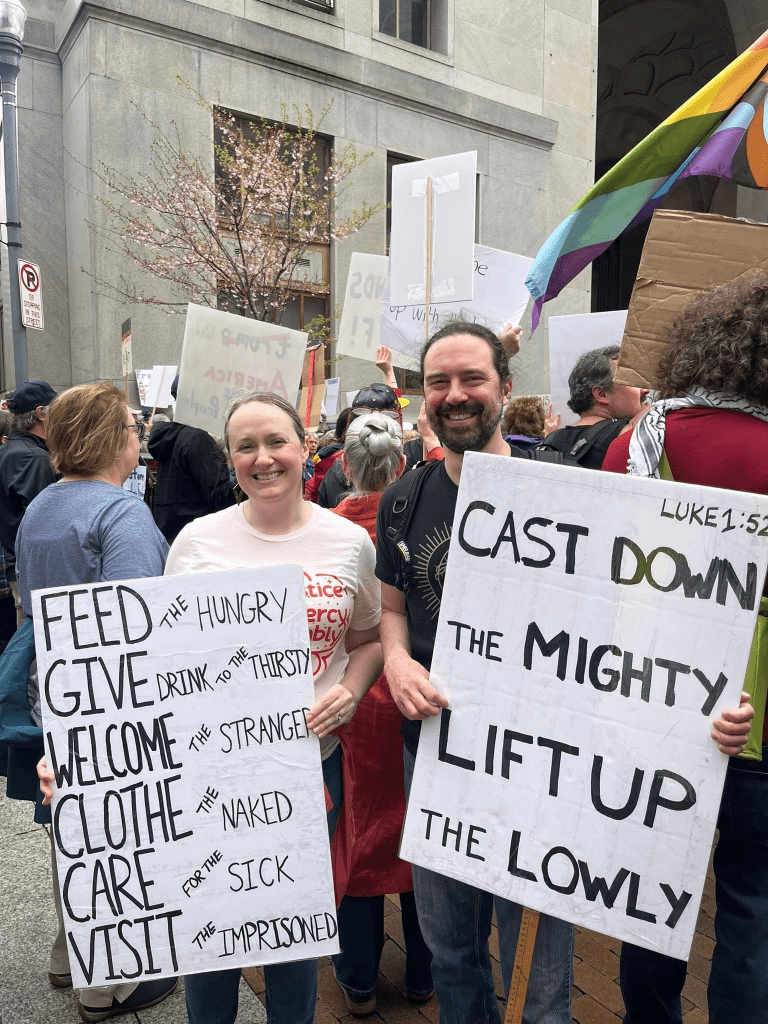
The witness of the faithful such as Darcy remind us of Jesus’ assurance to his friends: “And you know the way to the place where I am going….I am the way, and the truth, and the life” (John 14:4,6).
Perhaps this is cold comfort to us, as we know Jesus’ way leads to the cross. In this moment there are many among us on the Way of the Cross, suffering for speaking truth, suffering after unjust or farcical trials, suffering an apparent death sentence while living under occupation, and daring to continue to live. For many, the world has already gone dark at midday, though somehow day continues. So we work in the grime of the streets and the disorder of our homes. And in the comfort and discomfort of one another’s presence, we wash and are washed. We give, take, and eat together. Sometimes we stay awake and keep watch, while at others, we rest and are sheltered. And so we journey together to a place yet unseen.
It seems a strange time for a feast. At his last meal, Jesus, so much like us, must have known that. And yet, he hungered still. Jesus, so much as God, also knew that beyond the utter darkness surrounding the cross was something just beyond the reach of death. That is why he consoled and consoles still, “Do not let your hearts be troubled, and do not let them be afraid” (John 14:27).
We, as Jesus’ friends, are invited to his supper, to be nourished by him, and to feed one another. To be so bold as to believe that our meager bread offering can one day satisfy all through a multiplication of love.
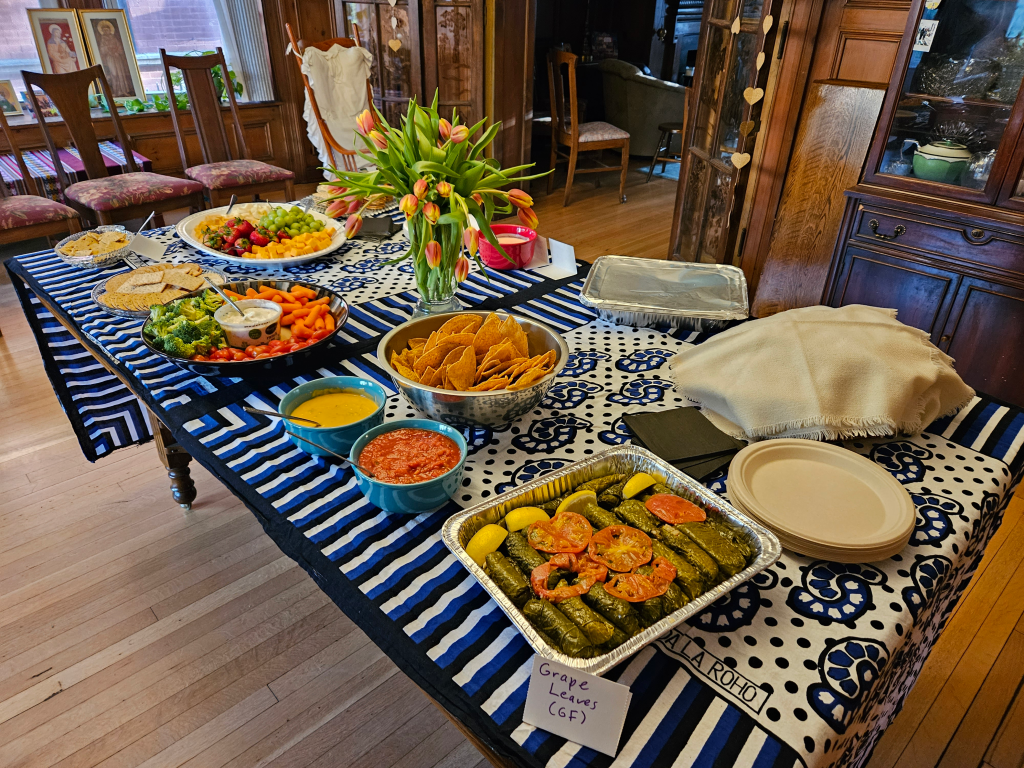
ABOUT THE AUTHOR

Angela Paviglianiti was ruined for life in the Jesuit Volunteer Corps around the turn of the century. She is what happens when you mix women’s studies, social work, and seminary. Angela is indebted to Ignatius of Loyola and Dorothy Day, although she probably wouldn’t have gotten along with either of them. She still believes in fairies, and the Gospel according to you and me and us.



One Comment