

Living the Stigmata Today
For years in the depths of depression I had constant thoughts of not wanting to live any longer. This suffering felt tragic and senseless. I could not see a future. It was hard even to see God. I felt worthless, at the same time that I was living my vows as a Franciscan Sister of Perpetual Adoration and serving in the church.
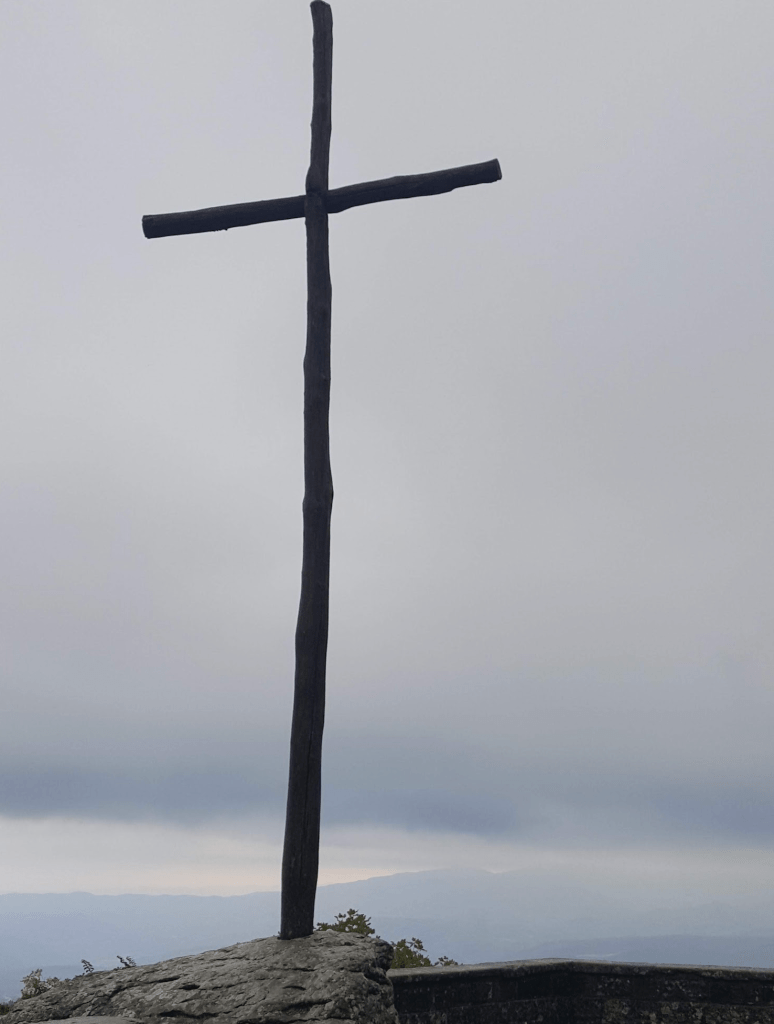
As a sister, as a listener, and as a human, I hear how each person carries a deep despair. When united to Christ, it’s not only easier to bear but it becomes meaningful. When God became human and took on flesh he lifted up suffering, infusing it with his love and the face of God.
St. Francis suffered deeply in a way that bound him uniquely to Christ. Eight hundred years ago, while praying at La Verna, he was visited with a vision of the Crucified Christ that would mark his very flesh with five wounds which stayed with him for the rest of his life. This September, the Franciscan Family remembers the stigmata.
In the words of St. Bonaventure, one of Francis’ early biographers, in the Life of St. Francis:
“His unquenchable fire of love for the good Jesus, was fanned into such a blaze of flames that so many waters; could not quench so powerful a love…When Francis saw [a vision of a fiery angel and Christ crucified], he was overwhelmed and his heart was flooded with a mixture of joy and sorrow. He rejoiced because of the gracious way Christ looked upon him under the form of a Seraph, but the fact that he was fastened to a cross pierced his soul with a sword of compassionate sorrow.” (Bonaventure, Life of St. Francis)

A couple of things speak to my heart from this passage. First, even though Francis’ body was marked with painful wounds, this was an experience of love. He overflowed with a powerful unquenchable love that manifested in a vision of the Crucified one. Second, his heart was filled with a mixture of joy and sorrow. Joy, to be gazed upon by his Beloved. Sorrow, because of the reality of the cross.
For me, I return to the joy of Christ’s face, the love of the good Jesus, while experiencing at the same time the compassionate sorrow of the pierced and bleeding Jesus. When I hear about the suffering children in Gaza, or see the unsheltered on our streets, I am filled with this same compassionate sorrow.
We do not suffer alone. Right now, in the world, all of our suffering is intermingled. A child’s cry in Sudan, an unemployed factory worker in Detroit, and the very trees themselves in the Amazon are all marked with the stigmata today. Creation and humanity alike are united to Christ’s suffering.
Recently, two unexpected voices encouraged me to expand my image of what the stigmata really means. Compassionate suffering today is not just being in solidarity with others that suffer, but realizing that as we work toward our desired future together, suffering profoundly changes us, like the marks on Francis’ body.
One of these voices is Cassidy Hall who I heard speak and who has just published, Queering Contemplation: Finding Queerness in the Roots and Future of Contemplative Spirituality.
In her I heard a way forward. Both the act of “queering,” or looking at something differently than expected, and of contemplation, help us find an inner stance that invites new possibilities. Here she describes a profound experience:
In 2015, I was attending my first conference with the International Thomas Merton Society at Bellarmine University in Louisville, Kentucky. There I heard psychotherapist Dr. Jim Finley speak from the heart about his experience being a novice (a new monk) under the direction of Thomas Merton, and some of the many life lessons he’s experienced since then. It was here that I first heard Jim describe the mystical experience of unity in love-making: a creative unfolding, encounter, and interconnection. “The poet cannot make the poem happen, but the poet can assume the inner stance that offers the least resistance to be overtaken by the gift of poetry,” he said. “Those committed to healing cannot make healing happen, but they can assume the inner stance that offers the least resistance to the gift of healing. Lovers cannot make their moments of oceanic oneness happen, but together they can assume the stance that offers the least resistance to be overtaken one more time by the gift of oceanic oneness.” What might it mean for us to assume the particular inner stance that each moment invites us into? How might we queer the moment, queer our inner stance, by opening ourselves up to the countless possibilities of continual transcendence? How might it feel to meet the mystical in ourselves, nature, our beloved, and the Divine through this oceanic oneness? (p. 59)
In this sense queering is a mystical act which opens us to union with the Divine in our daily lives. What is required for us to “assume the particular inner stance that each moment invites us into”? In both joy and sorrow, in a mode of unitive love, we can melt resistance to a hopeful future, and continually assume that inner stance that invites hope and love and resurrection. Hall, I believe, is showing the way through the now into our desired future, one which will honor both joy and sorrow.
The other voice came from an unlikely source, the Olympics. Jemima Montag, an athlete from Australia, speaks of the difference between wanting and needing a medal. What is the difference between wanting and needing our desired future, the resurrection that comes through our stigmata?
How do we work toward a future of hope, where needless suffering is reduced and love is amplified, without needing it? I think it goes back to Hall’s inner stance. When Francis, broken and tired as he was, climbed up the hill of La Verna, he had the inner stance to receive this grace of God’s love, a touch of his Beloved through suffering. We, all of us with our crosses, all of creation groaning for redemption, can draw closer to the Crucified One. When we let go of needing a better future somehow we are given the grace to actually work toward one.
We are not alone. Meaningless suffering has been infused by the God-became-Man, the Beloved, the Crucified One who not only journeys with us but transforms the journey.
ABOUT THE AUTHOR

Sarah Hennessey is a Franciscan Sister of Perpetual Adoration based in La Crosse, Wisconsin. She grew up in North Carolina as an active Quaker and became Catholic in 2000. For her, Jesus’ messy business includes falling in love with Christ AND with the People of God! Her heart is on fire for her Franciscan community, poetry and singing and accompanying people through birth, death and the living that comes in between. She currently ministers as a spiritual director at Franciscan Spirituality Center in La Crosse.

